F1 Grand Prix of Belgium — Results & aftermath

Apologies but due to logistical difficulties I was not able to file my report on the Belgian Grand Prix until now. But here’s what went down on Sunday in the Ardennes at Spa-Francorchamps…

Surging Ricciardo takes 2nd straight win for Red Bull, Rosberg relegated to 2nd after early race incident with Mercedes teammate Hamilton; Bottas grabs another strong 3rd for Williams

F1 Grand Prix of Belgium

The echoes of Senna-Prost grew a little bit stronger Sunday at Spa as Mercedes teammates and Championship contenders Nico Rosberg and Lewis Hamilton clashed early on lap 2, damaging Rosberg’s front wing but catastrophically puncturing Hamilton’s right rear far from the pits. The Englishman, who had been ahead as Rosberg tried an inside move when tire and wing came together, then had to limp home as his tire delaminated and began buggy whipping his bodywork for nearly 4 miles. While his Silver Arrow was able to continue it put him so far back in the pack that eventually the team retired the car in order to save the engine for future use, earning Hamilton zero Drivers’ points after starting from 2nd on the grid. Rosberg, who had won the Pole in wet conditions on Saturday, was able to soldier on despite an off sequence pit stop for a front wing change, showing great pace as the race wound down and coming home in second place and with a tidy 18 Championship points. Afterwards, the acrimony between the teammates was palpable with claims by Hamilton that Rosberg had stuck his nose in deliberately to “prove a point” and Rosberg putting it all down to a racing incident but certainly not apologizing. Mercedes team management was less than thrilled with the loss of Constructors’ points from the clash and vowed to give both drivers a stern talking to. But then again, it’s racing not a Sunday drive in the forest so these things happen between intense competitors and any ill will generated by them only serves to spice up the Championship going forward, especially with Mercedes running away with it. I say keep it up, lads!

Almost lost in all that controversy was another outstanding performance by Red Bull junior driver Daniel Ricciardo, who took advantage of the Mercedes infighting to run away to victory. Continue reading →

The Allure of Military Watches — IDF Eterna KonTiki Super

One of my favorite MilWatches is the early 1970s Israeli Defense Force (IDF) Eterna KonTiki Super, which was issued to Israel’s elite naval commando unit Shayetet 13, some really hardcore Special Forces operatives and essentially Israel’s version of our SEALs. You can read about S’13 history here but suffice to say they were in the thick of it during very perilous and conflict-filled times for Israel and many of these watches have seen genuine naval special forces combat.

S'13Ops2

Although the tonneau-style case is not everyone’s cup of tea, I really like it and you can find similar typically ’70s shapes on several other dive watches of the period, including the Aquastar Benthos divers’ chronographs. At 41mm wide x 45mm long x 14mm thick this is definitely a man-sized timepiece and the super-chunky uni-directional elapsed time bezel is easy to get a grip on in wet conditions and when wearing dive gloves.

IDFKonTiki2-crwn_edited-1

Obviously, as with so many military watches, what differentiates the IDF KonTiki Super from its civilian brothers are the issue marks engraved on the back by the quartermaster. In this case, the engravings are primarily in Hebrew, as well as containing the general spec & unique issue number of each individual watch in Roman numerals. Despite the exotic look, the Hebrew writing is essentially standard information translating to “catalogue number” and the “ע” (Tzade) symbol standing in as an abbreviation for IDF (“Tzahal”) (h/t milspectime.com).

IDFKonTiki2-bk_edited-1

I suggest doing your homework on the correct font and style of these engravings, because like a lot of other valuable commodities in the military watch world the IDF KonTiki is faked and faked often .

With its heavy steel screwed-back construction, screw down crown and high-pressure mineral crystal, the KonTiki Super is tough as nails and was ultra-water resistant in its day. Continue reading →

What we’re listening to — Not Ready Yet by Eels

Since depression is the watchword the past few days, I think this Eels song from 1996’s Beautiful Freak does an amazing job of encapsulating the hoepless feeling and the futility of someone else telling you to buck up. Listen to the lyrics and tell me if you don’t agree.

Sometimes the best way to beat sadness is to listen to sad music, especially when the singer has more than a passing knowledge of what he’s talking about (as frontman E certainly does). Not everyone’s preferred therapy, I’m sure, but works for me.

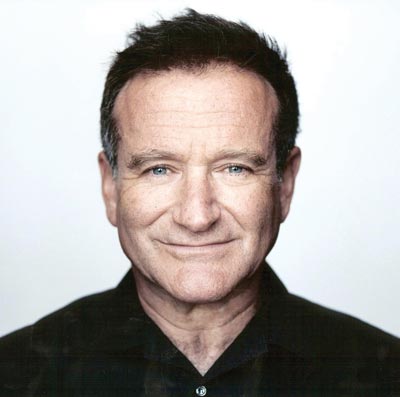
RIP Robin Williams — 1951-2014

Ok, I’ve been procrastinating on posting this because it is so fucking sad. Robin Williams died this August 11th of suicide by self-asphyxiation. The great actor and comedian had been battling depression, as well as falling off of the sobriety wagon in recent years. Williams was just 63 years old. His New York Times Obituary is here and a very good A.O. Scott appraisal with video is here.

Obviously the tragic irony of one of the world’s funniest men succumbing to depression is well-trod ground by now. To think that someone that successful and accomplished could not get the help they needed to make it through the darkness is simply frightening. But in the end we often walk alone in this world and what drives an amazing artist, which Williams undoubtedly was, can come from the dark places of insecurity and sadness deep within, even if the art in question is comedy with a capital C. I can’t think of another person funnier than Robin Williams when he was at his manic improvisatory best. If a talk show appearance can be called art, Williams performed it, on Carson or Letterman or a million other venues that should never have had room for such pocket Dada free associative miniature moments of brilliance. He enlivened the most mundane show business rituals with electric bolts of inspirational lightning. The sense that he was barely in control of his manic energies only added to the thrill ride.

As the years went by, well after his comet-like appearance on the scene in the late 1970s, Williams evinced a melancholy sensitivity in movies like Good Will Hunting, Awakenings and Dead Poets Society that saw him turning into a sounding board for people in need of compassion, especially young people, and an outsider’s point of view to deal with a stifling world. But that sad smile has been there from the start like the tears of Pagliacci, at least as far back as The World According to Garp, Moscow on the Hudson and bursting to raw fruition in Terry Gilliam’s revelatory The Fisher King. That undercurrent of melancholia was probably a major part of Williams as a person when he wasn’t “on”, obscured in the early days by his irrepressible, some would say uncontrollable, daffy genius when he seemed to be very nearly Bugs Bunny come to life. To be sure, Williams felt loss and sadness keenly through the years with the deaths of such friends as John Belushi, Andy Kaufman, Christopher Reeve and, most recently, his mentor and idol Jonathan Winters. Maybe we just didn’t want to believe that such real life losses would take their toll on our favorite comedian.

A genius in more ways than one, Williams’ gift must have also been something of a curse, creating the expectation in his audience that he must deliver to them transcendental moments of hilarity on demand and at all times. Continue reading →

Documentary view — Salinger

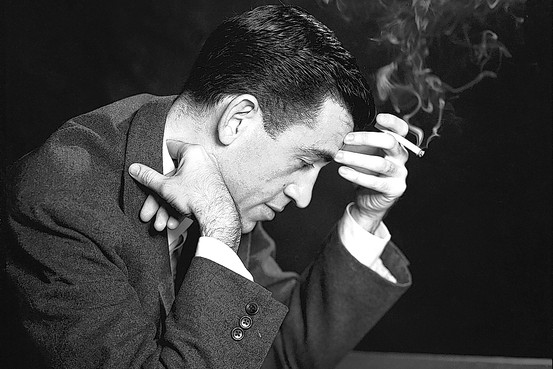
One of the literary world’s great mystery men, J.D. Salinger famously disappeared from public view in 1965, when his last work was published and 14 years after the release of The Catcher in the Rye, arguably the most influential novel of the post-World War II era. Immensely private almost to the point of mania, Salinger’s opaque personal history and life in seclusion have fascinated generations of fans, literary peers, critics and the media. Shane Salerno’s 2013 documentary Salinger, which can be viewed via streaming with a Netflix membership, attempts to “find” the reclusive author by investigating and fleshing out his pre-fame life and examining the motives behind his self-imposed exile after achieving literary immortality. For the most part, it succeeds extremely well at this daunting task.

Not a great documentary but a pretty damn good one, Salinger features interviews with lifelong friends and acquaintances dating back to his pre-WW II days in New York City when he was just an aspiring writer striving for success and any sort of recognition. Significantly, it explores his engagement to the fetching debutante Oona O’Neill, Eugene O’Neill’s daughter, who eventually dumped Salinger for the much older Charlie Chaplin. Shortly thereafter Salinger was sent to Europe as a combat soldier in the Army. Salinger saw action on D-Day, in the Battle of the Bulge, the Battle of Hurtgen Forest and was at the liberation of one of the Dachau concentration camps. The documentary posits convincingly that it was these twin traumatic experiences, particularly his harrowing war service, which informed all his future work and lead to his compulsive focus on unspoiled youth, eventually driving Salinger to seek to create and control his own private universe.

It also chronicles how he was constantly submitting to and being rejected by his dream venue, The New Yorker, before during and after the War, even as he achieved modest success in the so-called “slick” magazines. He finally found a sympathetic figure at the The New Yorker in fiction editor William Maxwell, who agreed to publish “A Perfect Day for Bananafish”, which became a major success. It also introduced the world to the brilliant and strange Glass family through its troubled eldest son Seymour Glass, a shell-shocked war veteran. The history of the Glass family would later become Salinger’s lifelong obsession. But before that detour, several more short stories were published by the New Yorker, including “Uncle Wiggly in Connecticut”, which Salinger eagerly optioned to Hollywood for a film version. The result, a Dana Andrews-Susan Hayward romantic vehicle retitled My Foolish Heart, was so unfaithful to his original story that Salinger never again allowed a film version of his work despite his obsessive love of cinema and constant entreaties from producers, directors and actors.

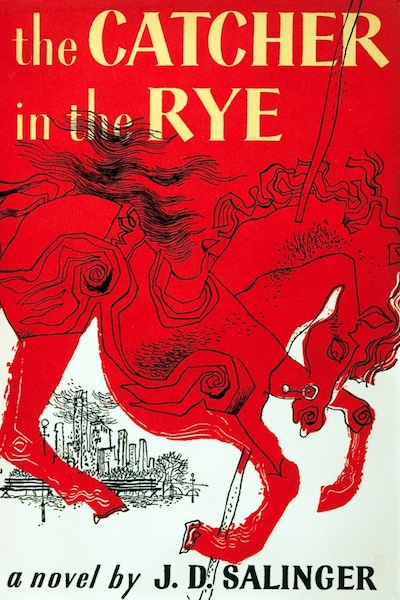
the-catcher-in-the-rye

But if Salinger was smarting over Hollywood’s betrayal he put that anger to good use, channeling his rage at the “phonies” into the archetypal youth novel, The Catcher In the Rye. Continue reading →

What we’re listening to — The Yardbirds

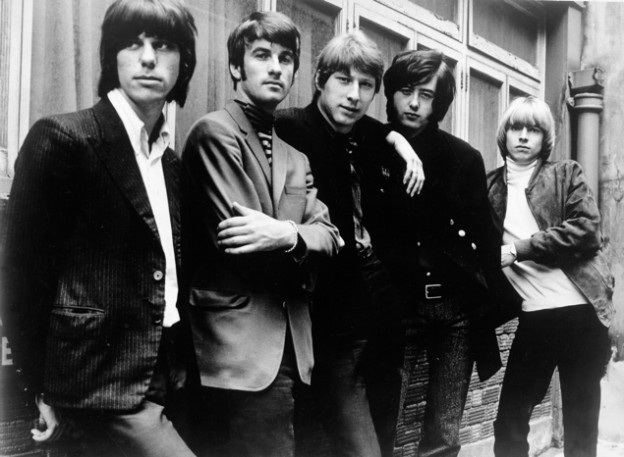
There’s no arguing that The Yardbirds were one of the most important bands at the forefront of the British Invasion following the Beatles trans-Atlantic seismic smash-through. They were also an incubator of greatness. There is no other band in Rock history that can boast of having three of the most legendary guitarists grace their lineup at different points in its evolution. But with first Eric Clapton then Jeff Beck and finally Jimmy Page, The Yardbirds can stake exactly that claim. While they were somewhat eclipsed as a band by their illustrious members’ later fame and renown, it’s important to remember just how bloody good and groundbreaking The Yardbirds really were.

They started out by covering American Blues with an original lineup consisting of lead singer Keith Relf, Paul Samwell-Smith on base, Chris Dreja on rhythm guitar, Jim McCarty on drums and the short-lived Anthony Topham on lead guitar. When Clapton replaced Topham and the band took over the Rolling Stones’ spot at the famed Crawdaddy Club in 1963 the word was out in R&B-mad London that there was a new force to be reckoned with. But, much like the Stones and the Animals, The Yardbirds were not content with traditional Blues covers despite their proficiency and they rapidly branched out into offbeat, minor chord arrangements and a desire to push the Blues further into a heavy rock feel by utilizing distortion and feedback. It’s no accident that the last incarnation of The Yardbirds was actually the first coming together of Led Zeppelin in all but name only. It can be argued that there is a direct line from The Yardbirds fist pioneering improvised raveups circa 1964 to the heavy English Blues explosion of the later 60s that led to not just Zep but Cream, Iron Butterfly, Free, Deep Purple and a million other hard rocking white boys, eventually morphing into Glam and Heavy Metal.

With the charismatic Relf’s distinctive, somewhat ominous baritone and the band’s penchant for offbeat tempos and Eastern influences, The Yardbirds consistently produced some of the most interesting singles of the 60s, beginning with their breakout hit, “For Your Love.”  Continue reading →

RIP James Garner, 1928-2014

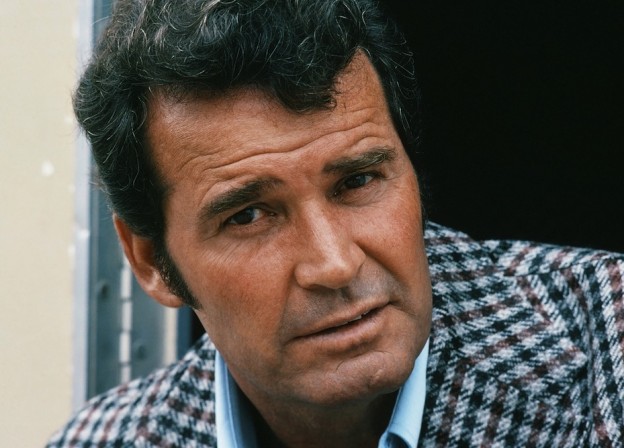
When James Garner passed away the other week at the age of 86 I felt as if I had lost a favorite uncle. Wry, worldly wise, down to earth, a little cynical, a little cranky, very funny and definitely a man’s man, Garner was a uniquely successful and uniquely American actor. The native Oklahoman started out in 1950s television after a very brief theater apprenticeship, and quickly achieved fame in Maverick as the title character Brett Maverick, the dapper and quick-witted Old West card sharp who preferred talking his way out of trouble to shooting. He then rose to stardom as a romantic lead and action star during the last gasp of the old Hollywood studio system: alongside Steve McQueen and Charles Bronson playing the Scrounger in the all-star POW epic The Great Escape and wooing Julie Andrews in Blake Edwards’ sly, sophisticated anti-war comedy, the Americanization of Emily (Garner’s own favorite film). After the excellent Western comedy Support Your Local Sheriff and a foreshadowing turn as a bemused Marlowe, he found cultural immortality back on TV as the iconic and perpetually harassed ex-cop, ex-con gumshoe Jim Rockford.

https://www.youtube.com/watch?v=StcJVOIxLdo

For those of us who grew up in the 1970s, The Rockford Files was omnipresent, from the jaunty Mike Post theme song after the answering machine sequence to the initial run from 1974-1980 to the endless repeats in syndication. The series gleefully embraced a non-glamorous LA with the laconic and perpetually broke private eye working low rent bars and strip clubs while living in a cheap trailer home on Malibu beach, getting his meals from taco and hotdog stands and bouncing checks at the local grocery. It was a unique persona for a hero PI, totally at odds with, say, the slick rich kid mastermind of George Peppard’s Banacek. But then, maybe that’s why The Rockford Files went on to television immortality while Banacek, for all its tacky turtlenecked pleasures, is more of a fun footnote. There was just something so original about Jim Rockford as a hero: the loud sports coats with wide lapels; the wrongful conviction that gave him his cynical perspective; the beatdowns given and received; the clever ruses and identity games when on assignment; his meddling and very funny father (Noah Beery); and always a good old fashioned car chase in the mysteriously overpowered and rubber screeching gold Pontiac Firebird.

https://www.youtube.com/watch?v=Pruex3pgX1g

I told you that theme song was omnipresent! Garner was, in fact, an excellent driver and racer — he caught the bug starring in John Frankenheimer’s seminal racing movie, Grand Prix, competing in several grueling Baja 1000s thereafter — and did much of his own driving on the series, as well as many of his own stunts. Continue reading →

tomvox1’s Watches for Sale — July selection, Pt. III

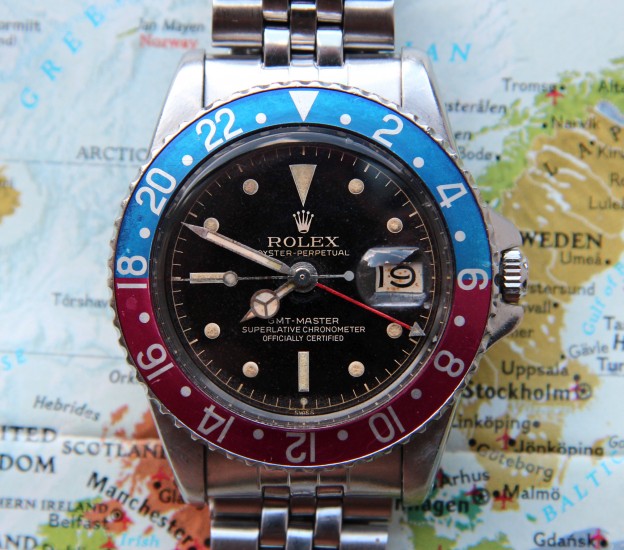
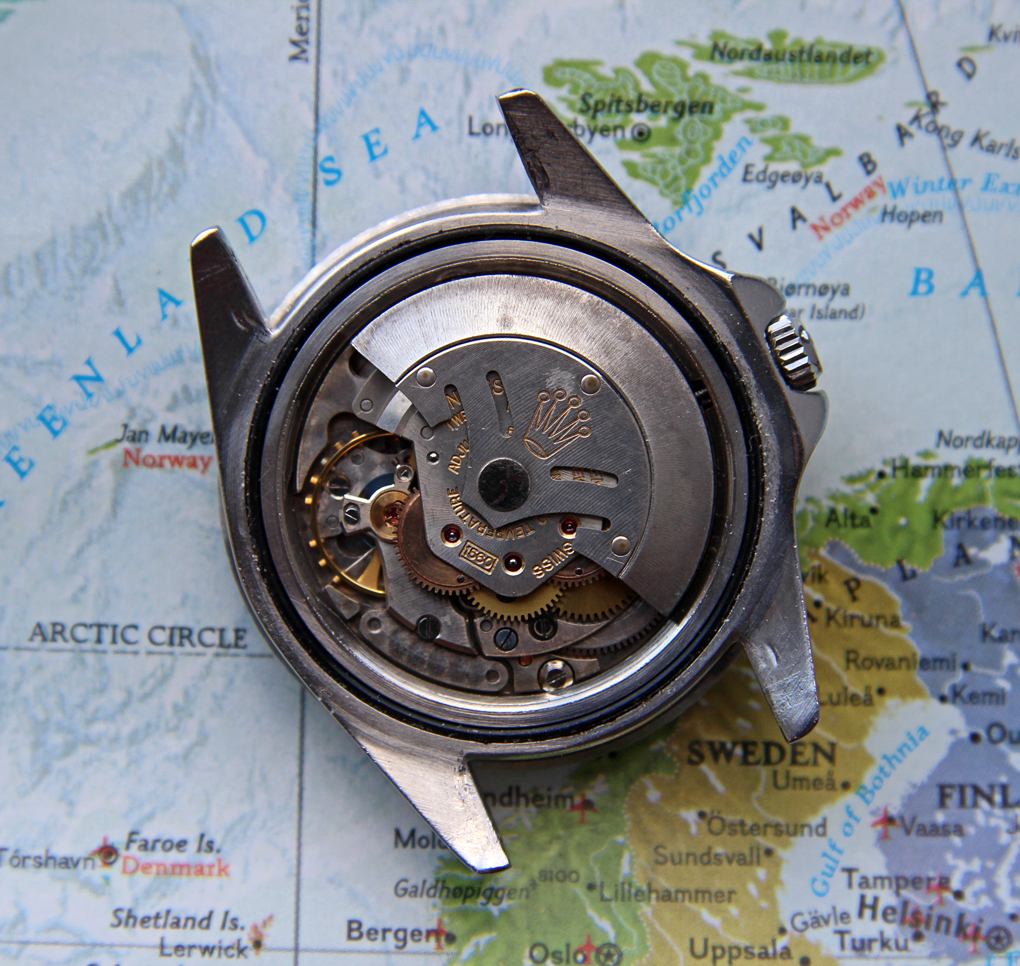
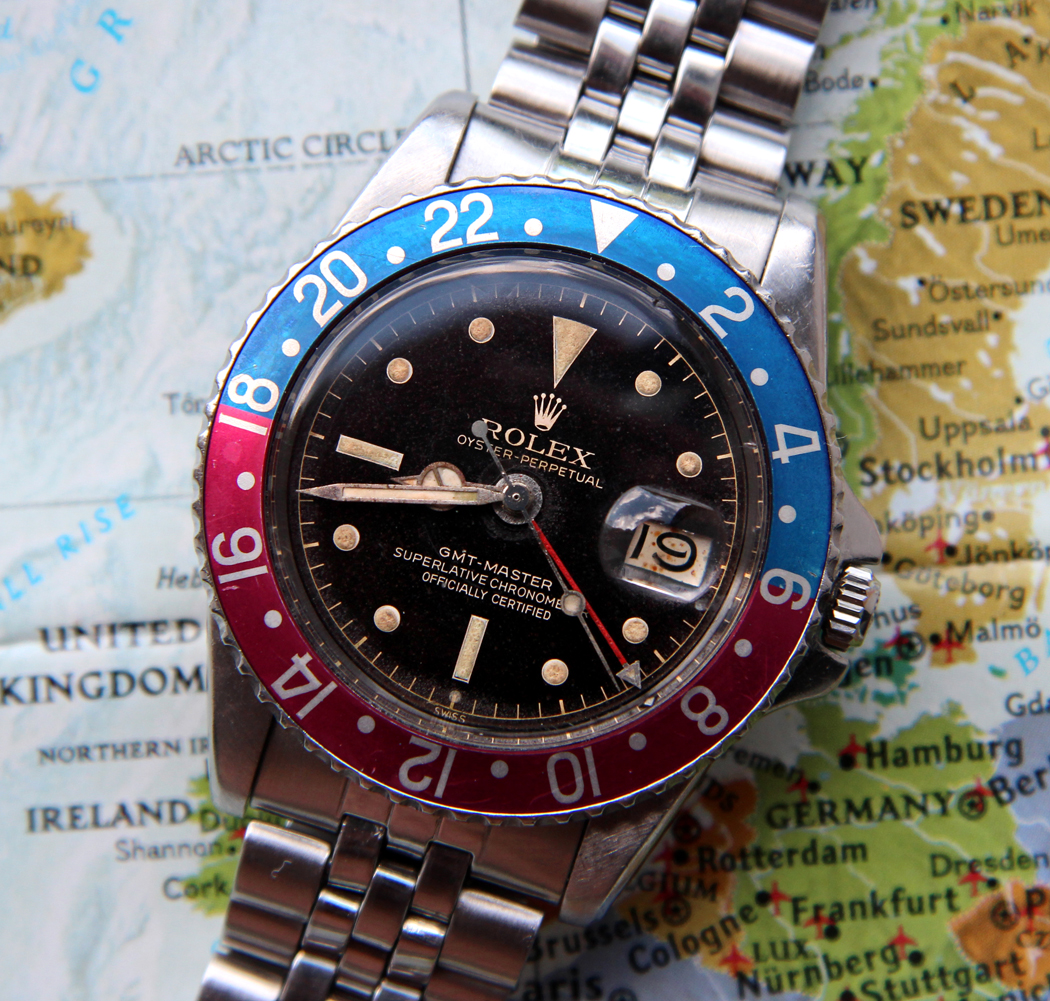
As July winds down to a close it’s my great pleasure to offer one last watch. And it happens to be one of the all time vintage Rolex icons: An early 1960s GMT-Master with gilt/gloss minute track dial, mini 24-hour hand, pointed crown guards case and beautifully faded “Pepsi” bezel insert, with the excellent caliber 1560 GMT chronometer movement under the hood still sporting its original Butterfly rotor.

KM1675Pointy-move_edited-1

I’m selling this one on behalf of a friend and I’m excited to be able to do so, as this classic two time zone watch is such an unmolested, honest example and with just enough WABI to show that it has lived a wonderfully full life. Among the 1960s steel Sports models, this early reference 1675 is right up there with the pointed crown guards 5512 chronometer Submariner as the most desirable and beautiful on the wrist. Simply put, if you want pure Vintage Rolex style of extremely high original quality, this is your watch. It’s not cheap, but then the best things in life never are.

KM1675Pointy-2_edited-1

Check out the complete ad with many more pictures and full description over at the Vintage Rolex Forum’s Market. SOLD