12 Hours of Sebring alert

For those who enjoy multi-class sports car racing, the Tudor United SportsCar Championship offers up another American classic later this morning: The 12 Hours of Sebring. Beginning at 11am from the famed old airport track in western Florida, this bumpy 3.74 mile circuit is often said to be harder on man and machine than the 24 Hours of Le Mans. You can catch all the action, which is often spectacular and quite dangerous despite the flat course, live on a variety of Fox Sports platforms and IMSA.com’s live stream, as below:

Television Broadcast:
  • 10:30 AM – 12:30 PM ET (LIVE)

    FOX Sports 1

  • 12:30 PM – 07:00 PM ET (Live)
    FOX Sports 2
  • 07:00 PM – 10:00 PM ET (Live)

    IMSA

  • 10:00 PM – 11:00 PM ET (Live)
    FOX Sports 2
  • 08:00 AM – 10:00 AM ET (Recap)
    FOX Sports 1

    So all you sports car fans out there, strap in and buckle up for 12 hours of multi-class mayhem Sebring style!

2015 F1 Grand Prix of Australia — Results & aftermath

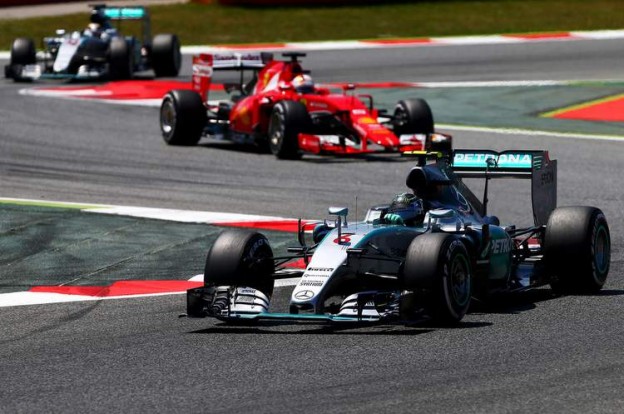
The new season got off to a very strange start in Australia on Sunday, as nearly half the field failed to make it to the end of the race and several big names were out even before the grid was formed. Young drivers also showed that they belonged in the big time with standout performances that put pressure on the established stars. And a former 4-time World Champion came in from the cold and into the warm embrace of Maranello and the tifosi. But for all that was new and unexpected at the Albert Park street circuit in Melbourne one thing was all-too-familiar for the chasing teams in the paddock: Mercedes and Lewis Hamilton continued to reign supreme.

Mercedes & Hamilton still untouchable in 2015 debut, Rosberg a familiar 2nd; Vettel takes Ferrari back to the podium

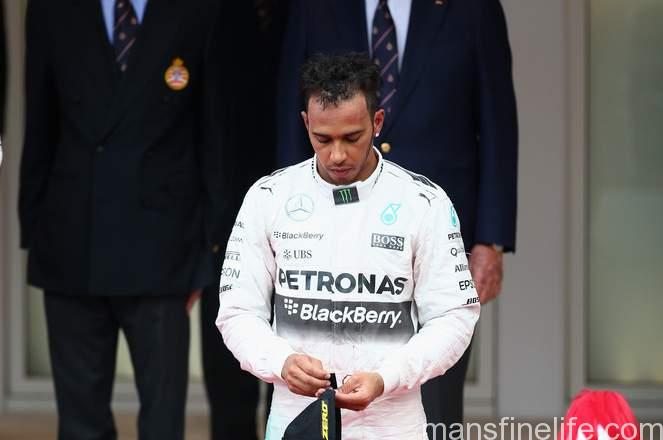
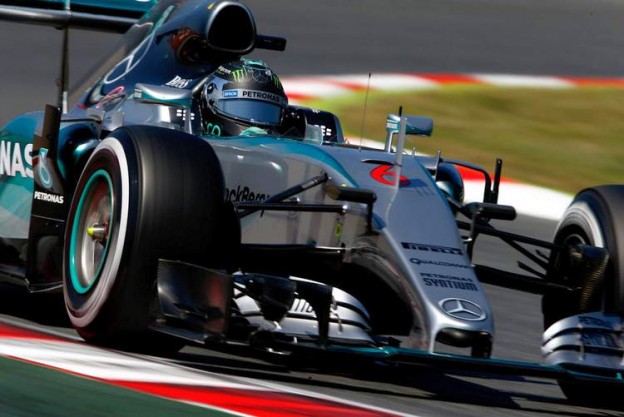
Running from Pole to the win in intense but seemingly effortless manner, 2-time and defending World Champion Lewis Hamilton laid down a fierce challenge to his teammate Nico Rosberg and any other pretenders to the throne. The Englishman badly wants a third title to put him the conversation of all-time greats and even if it was only the debut race of the season it’s hard to see how anyone is going to stop him. The Mercedes F1 W06 looks potentially more dominant than last year’s model with a season’s worth of race data for improved reliability under its belt and what appears to be increased horsepower squeezed out of the advanced hybrid engine. And Hamilton may well have broken Rosberg’s resolve with last year’s end-of-season rampage to snatch the title from the German for a potentially unbeatable psychological edge. So, with the near-perfection of the Silver Arrows, a once-defeated Rosberg seems to be the only driver that can pose a challenge to Hamilton on paper. Now, maybe the runner-up can rise to the challenge and wrest the Championship away. But at times in Australia it felt like Hamilton was merely toying with his German foil: Rosberg would close the gap to under 2 seconds as the race wore on and Hamilton would pull it out again at will. Rosberg never did get to within the 1-second margin, the magic number for DRS use and overtaking possibilities. Obviously, it’s only Race 1 of a 20 Grand Prix calendar. But barring unforeseen circumstances, we could well be looking at the beginning of one of the most dominant seasons ever for an F1 pilot.

Behind the orderly march to victory of the Mercedes factory duo, all was chaos. Continue reading

What we’re listening to — I’m In Love With My Car by Queen

I’m not that big of a Queen fan — they were played to death on the radio when I was a kid and there’s something about the rococo pretensions of a song like “Bohemian Rhapsody” that makes me want to do violence to the local jukebox. But I do like this song, probably because it isn’t one of their big hits and also it doesn’t really sound that much like Queen for the simple fact that it’s a Roger Taylor composition and not a Freddy Mercury. Also, I’m sensing a theme around here so this one goes out to Graham while we wait for his report from Down Under. And really, all of us around here are in love with our cars whatever the make or model. Aren’t you?

2015 F1 Grand Prix of Australia — Qualifying results

After a seemingly interminable winter, the 2015 Formula 1 season is finally upon us and Qualifying for the Grand Prix of Australia went down earlier today at Albert Park in Melbourne. Would Mercedes still reign supreme after last year’s romp to the double World Championship? Or would Williams, Red Bull, Ferrari and McLaren have found something to take the fight to the Silver Arrows? It was all there on display Saturday, the moment of truth after a long off-season of testing, driver changes and just plain waiting for the engines to be fired in anger for that one-of-a-kind thrill: the start of a new Grand Prix season…

Hamilton opens title defense with dominant Pole in Melbourne, Mercedes’ teammate Rosberg a familiar 2nd; Massa 3rd for Williams proving 2014 was no fluke

Ominously for the rest of the paddock, 2015 started out much like 2014: With the Mercedes chassis dominant from the start and the Drivers’ Championship looking like a strictly intramural battle between reigning World Champion Lewis Hamilton and his runner-up teammate, Nico Rosberg. Continuing the momentum of his end-of-season rampage that clinched last year’s title, Hamilton got the better of Rosberg in the first Qualifying session of the new year, laying down a blistering 1:26.3 in Q3 at the beautiful Albert Park street circuit, which so often serves as the season’s first field of battle. His archrival Rosberg, whose car appeared to suffer from minor mystery maladies all weekend long, nevertheless cruised to second on the grid, a mere .6 behind the Englishman. Also following last year’s trend line, the Mercedes-powered Williams of Filipe Massa qualified a strong 3rd, just under .8 seconds behind Rosberg. Again, it looks like Mercedes is the engine to have in the rebirth of the turbo-charged era and that the factory team, along with its superlative duo of pilots, has the chassis to beat.

Sebastian Vettel in his new ride

Sebastian Vettel in his new ride

All was not an exact copy of 2014, however, and perhaps no team seemed more revived than Ferrari, who appear to have put last year’s dismal and dysfunctional campaign well and truly in the rearview mirror. Continue reading

Watch Collector’s Notebook — IWC’s original Yacht Club, an avant garde answer to the Datejust

One of my favorite vintage brands and one which I also feel is consistently undervalued is the International Watch Company of Schaffhausen, better known as simply IWC. Back in the day, every IWC watch had an in-house movement and their manual wind and automatic calibers were some of the best, most reliable and accurate machines on the market. With their bespoke Pelleton winding system, which was developed by the marque’s famed technical director Albert Pelleton in the early 1950s, IWC offered a solid alternative, if not also an implicit challenge, to Rolex’s longtime dominance of full rotor automatic technology. IWC continued to develop their 85x auto calibers for nearly two decades until they reached what many experts consider the pinnacle with their legendary 8541B movement. And it is the 8541B that you find in IWC’s other implicit challenge to Rolex, the beautifully designed Yacht Club model.

IWCYachtClub-6_edited-1

Debuting right at the dawn of the funky 1970s when the Swiss watch industry would go somewhat design mad chasing rapidly changing tastes and fashions, the Yacht Club manages to be at once cutting edge and traditional. Making full use of the sweeping lines of the “C”-shape case, variations of which are also found in contemporaneous Omega Constellations and Heuer’s automatic Carrera, the Yacht Club’s heavy steel case is a perfectly proportioned 36mm X 44mm. That’s much bigger than the rather medium-sized C-shape Connie and obviously not as big as Heuer’s macho racing chronograph, so where it ends up is exactly in the same size bracket as Rolex’s evergreen, the Datejust. And that’s really the best analog and probably the exact watch IWC were gunning for. For if the Datejust was the icon of a never-changing design standard, the Yacht Club aimed to offer the same sort of elegance but with a bit of an avant garde twist for the modern man.

BlueYachtClub2_edited-1

Hence the lugs sweep inward toward the bracelet rather than projecting out in a relatively straight line like the DJ, giving the dial extra prominence and pop. And what beautiful dials the Yacht Clubs had, from the classic beauty of starburst silver to moody, manly gray to my personal favorite, an astonishing blue that changes in hue ever so subtly depending on the angle at which its viewed. Note also the classy way the date discs are not one-size-fits-all for the colored dials but rather reverse printed with white numerals on the matching color background of the dial. Nice touch! The hands are luminous with black inlay and very easy to read and there is something that really appeals about the applied IWC logo of this period. I like it better than the earlier printed full script “International Watch Co.” alone and much more than the later boring printed block lettering, which still adorns their dials today.

IWCYachtClub-bk1_edited-1

The Yacht Club was also a departure for IWC in that prior to its introduction they produced only a few special models with a screw back case design, such as the anti-magnetic Ingenieur and the diver-centric Aquatimer. Continue reading

RIP Leonard Nimoy, 1931 — 2015

Leonard Nimoy, an actor who became a worldwide cultural icon with his multifaceted portrayal of Mr. Spock in the groundbreaking 1960s sci-fi series Star Trek, died this past Friday at the age of 83. Nimoy’s characterization of the starship Enterprise’s First Officer functioned as the calm, intellectual super ego influence on Captain Kirk in diametric opposition to the id persona of the hyper-emotional Dr. “Bones” McCoy. The only alien crewmember in the original series, Nimoy gave creative life to the Vulcan philosophy of anti-emotionalism, logic and intellectual rigor and portrayed the consummate outsider bemusedly observing the confusing passions and paradoxes of the human species. In the series, the Vulcan race had long ago determined to exercise rigid control of their emotions in order to put an end the destructive internecine conflicts of their race. But as a mixed race man whose mother was from Earth, Nimoy also gave subtle expression to the human impulses beneath the surface of Spock’s greenish, pointy-eared exterior, which he sometimes struggled to control.

leonard-nimoy_spock

With its futuristic vision of the USS Enterprise as a powerful but peaceful galactic explorer, representative of a vast United Federation of Planets including an Earth that had survived near-apocalyptic conflicts in the 20th and 21st centuries, Gene Roddenberry’s idealistic creation was not an overnight sensation. Slowly but inexorably it gained in popularity, growing from a cult following during its short 3-year 1966-69 run on NBC into a global phenomenon, the relentless result of non-stop syndication, animated spin-offs, novelizations and popular paraphernalia & technical literature. By the time Star Trek was reborn cinematically a decade later in the aftermath of the mega-success of Star Wars, an entirely new audience was ready to receive its tales of multi-ethnic, multi-cultural space adventure, which Roddenberry sometimes slyly referred to as simply a “Western in space.” As the myriad sequels, prequels and entirely new associated TV series proved, Star Trek may have started out as geek culture but there was a hunger across a large segment of the world for this intelligently thought out future of our civilization and its flawed but noble heroes and charismatic super villains. And as geek became chic and the brainy outsider became the unlikely hero of a new industrial revolution in the Computer and Internet Age, it’s no great stretch to believe that it was Nimoy’s characterization of Spock, cerebral and outwardly implacable with hidden reserves of humanity, that helped inspire future computer titans like Bill Gates and Steve Jobs in their youth. Building upon The Space Race mania of the 60s, Star Trek helped make science and technology as cool and appealing as the astronauts did — just ask all those fans who wound up working at NASA and in other engineering and technological fields. And, as not only the Enterprise’s First Officer but also its Chief Science Officer, no one was cooler than Mr. Spock.

The cast of the original Star Trek series and creator Gene Roddenberry meet the Space Shuttle Enterprise

The cast of the original Star Trek series and creator Gene Roddenberry meet the Space Shuttle Enterprise

Leonard Nimoy was also the cast member who had been with the franchise the longest, predating William Shatner’s Kirk and DeForest Kelley’s McCoy. Continue reading

Earworm of the day — Lately by The Helio Sequence

Nothing profound to say and no big write up but this 2008 tune from The Helio Sequence has been buzzing around inside my head and cropping up a lot on Pandora… Lately. Maybe it’s all that Portlandia I’ve been watching? Or maybe it’s just because these two guys are such talented and stalwart survivors of Indie rock — and the ever-mutating Portland scene in particular — that they deserve to be heard and heard often. This is an ideal gateway song for a band that rewards further exploration. Listen to it once and you’ll want to hear what else they’ve got.

Gorgeous Lady of the Week — Felicity Jones

No, Felicity Jones didn’t win the Best Actress Oscar last Sunday. But anyone who’s seen her remarkably brave and touching performance in The Theory of Everything knows that the lovely young Englishwoman’s future is nevertheless guaranteed to be golden. Ms. Jones’ Jane Wilde Hawking opposite Eddie Redmayne’s astonishing, Academy Award-winning portrayal as her physically impaired astrophysicist husband, Stephen Hawking, gives the film its soul and its heart. Her work is subtle and never mawkish but still communicates a woman pushed to the very limit by her belief in selfless love, her sense of guilt and honor and the slow motion tragedy of taking care of a husband with incurable neuromuscular disease. By turns strong and shattered, the actress achieves that rare thing in film acting: a fully realized human being with whom anyone with half a heart can empathize.

Felicity Jones

The 31-year-old Birmingham beauty began her career as a teen sorceress-in-training on ITV’s The Worst Witch and after 3 seasons she took time off to attend university. But acting remained her calling and she returned to it a young woman on a mission with an impressive run of supporting roles alongside major league actresses like Emma Thompson, Michelle Pfeiffer and Helen Mirren. That steady work with top notch professionals eventually led to her own star turn in 2011’s dizzyingly romantic Like Crazywhere she played a British exchange student abruptly separated from her American lover when her visa expires.

Felicity-Jones-3

She was also carried away by love in 2013’s critically acclaimed Breathe In, where Ms. Jones was again an exchange student, this time falling for Guy Pearce’s married music teacher and leading him astray with her vulnerability, musicianship and big blue eyes. That same year she picked up a British Independent Film Award nomination for her very moving work as Charles Dickens’ secret mistress in the ambitious period biography, The Invisible Woman. Directed with a fine, restrained touch by Ralph Fiennes while he simultaneously portrayed Dickens, it was clear that Felicity’s portrayal of Nelly Ternen and her May-September romance with the great author confirmed a major acting talent reaching full maturity. The fact that she had now held her own and then some with Pearce and Fiennes in two consecutive pictures announced to the world that this was a young lady unintimidated and ready for big things.

felicity-jones-5

And what could be bigger than her breakthrough in The Theory of Everything with its massive success and resultant accolades? Now everyone knows Felicity Jones, not just British film buffs. And with several more films in post-production and a secure spot as one of Hollywood’s new, young A-list actresses this should only be the beginning. Between those eyes, that face and all that talent we’re sure to be looking at Felicity for years to come. Which suits us just fine.


Cars we want — Alfa Romeo 4C

There is something delightfully impractical about Italian sports cars. They seem to sacrifice any pretense of driver and passenger comfort for the overall thrill of intoxicating design and performance. And there is no Italian manufacturer that embodies raw style over practicality more than Alfa Romeo. The debut of the simply named but exotic 4C, their pocket pasta rocket, also coincides with the return of the legendary marque to the American market after a generation’s hiatus. That means it’s time for Alfa enthusiasts to celebrate anew. Sure, its seemingly reasonable under-$60k base price can easily swell to the mid-$70s with options like “radio” and “tires”. Nonetheless, it may be time to reallocate some profits from the ongoing bull market in order to put your assets into the 4C’s form fitting bucket seats.

alfa_romeo_4c-2

An attractively visible reinforced carbon fiber tub is designed to meet U.S. crash test standards but only boosts the imported 4C to a still-featherweight 2500 pounds because of the almost total lack of metal bodywork. The heavily turbo charged engine with an eyebrow-raising 21.8 psi pumping into the tiny 1.7 liter block kicks out 238 horsepower for an impressive 10.4 power to weight ratio. Put another way, this slinky pocket-sized supercar will go 0-60 in 4.3 seconds and can be cranked up to a top speed of 158. Which is bound to feel pretty fast in something only slightly bigger than a Gucci loafer.

alfa_romeo_4c-1

Predictably for an Alfa, the 4C has plusses and minuses galore and it shows a definite split personality in terms of design attributes. With a laudable nod to purists, the car is equipped with a throwback fully manual steering rack that, while a bit of a handful in an urban environment, is sheer driving joy on any kind of twisty open road. It’s like going back in time to the golden age of roadsters. Likewise, the brake set up is super tactile in a less-is-more kind of way, making for almost balletic throttle to brake interplay. And the 4C is also classical in its mid engine layout, leading to exceptional balance and confident rotation through corners, a real driver’s car in terms of agility and unity with the road. And what gearhead wouldn’t love the over the top symphony of Latinate exhaust noises upon throttle application and gear shifts, not to mention the head turning only-from-Italy good looks?

But, as has been mentioned in nearly every review of the car, Alfa’s parent, Fiat Chrysler, has inexplicably declined to offer the 4C with a manual transmission, which borders on a criminal omission.

Continue reading

Documentary view — Big Star: Nothing Can Hurt Me

Of all the legendary, cautionary tales of shoulda’ been contenders in Rock history perhaps none went on to have as profound an influence on future artists as Big Star. After all, the losers, beautiful or otherwise, are supposed to remain in the cut-out bins with a small but dedicated fan base of maybe a couple of hundred stalwart fans proudly fanning whatever flickering flame remains. But the funny thing about Big Star was that the couple hundred stalwarts who kept their flame alive after they never caught on the first time around were mostly rock critics and aspiring rock performers. And what happened in the intervening decades is that the music of Big Star, a truly lost band during the 70s, wound up being disseminated through a thousand music reviews and a thousand demo reels going forward to become something like an archetype, a touchstone for the entire Indie and Alternative Rock scene. It somehow became instant street cred to name check Alex Chilton and Chris Bell, to seek out the original vinyl of the band’s seminal albums back in the days where you couldn’t just hit up iTunes and own it in an instant, to lay down a ragged cover of “Back of a Car” during a gig. But beyond the entrancing complexity and slowly dawning greatness of their ostensible pop music, Big Star was also shrouded in mystery, with a lot of vague tales about record deals gone bad, mental illness and creative self-destruction. Which, of course, only added to their mystique. At long last, 2012’s comprehensive documentary, Big Star: Nothing Can Hurt Me, shines a light on the mysteries that beguiled and bedeviled their fans for so many years. It also proves yet again that all that retrospective adulation was well earned, however bittersweet their career trajectory.

Formed in 1971 by Memphis natives Alex Chilton and Chris Bell, the original lineup also consisted of drummer Jody Stephens (the only surviving founding member) and bassist Andy Hummel. Chilton was already well established, having been a teen sensation as the blue-eyed soul frontman for The Box Tops, a well-produced outfit that clocked several hits including 1967’s classic Billboard #1, “The Letter” (later covered to even more dramatic effect by Joe Cocker). Chris Bell was a local kid dreaming of the Beatles and pop success, as well as an outlet for all the achingly beautiful and earnest compositions swimming around in his head. The result of their intersection was Big Star and their debut album, #1 Record, an unusally accomplished masterpiece with roots in the singer-songwriter ethos of the 60s but leavened with the angular hooks of British invasion power pop and more than a pinch of the Velvet Underground’s sonic subversiveness. Cuts such as “In The Street” (later famously covered by Cheap Trick as the title song for That 70s Show), “Thirteen” and “When my Baby’s Beside Me” spin gold from conventional romantic youth rebellion through the freshness of their composition and the unabashed belief in the power of the 3-minute pop single. As drummer Stephens wryly observes in the documentary, it could be said that by choosing such audaciously cocky names for their band and debut album they were tempting the Rock gods, as well as showing confidence (or hope) in their endeavor. But knowing Chilton’s later oeuvre, the implicit irony of such grandiosity seems entirely intentional.

Despite being universally praised by rock critics and industry mags, 1972’s #1 Record went nowhere fast due to the vagaries of bad timing and worse distribution. Continue reading