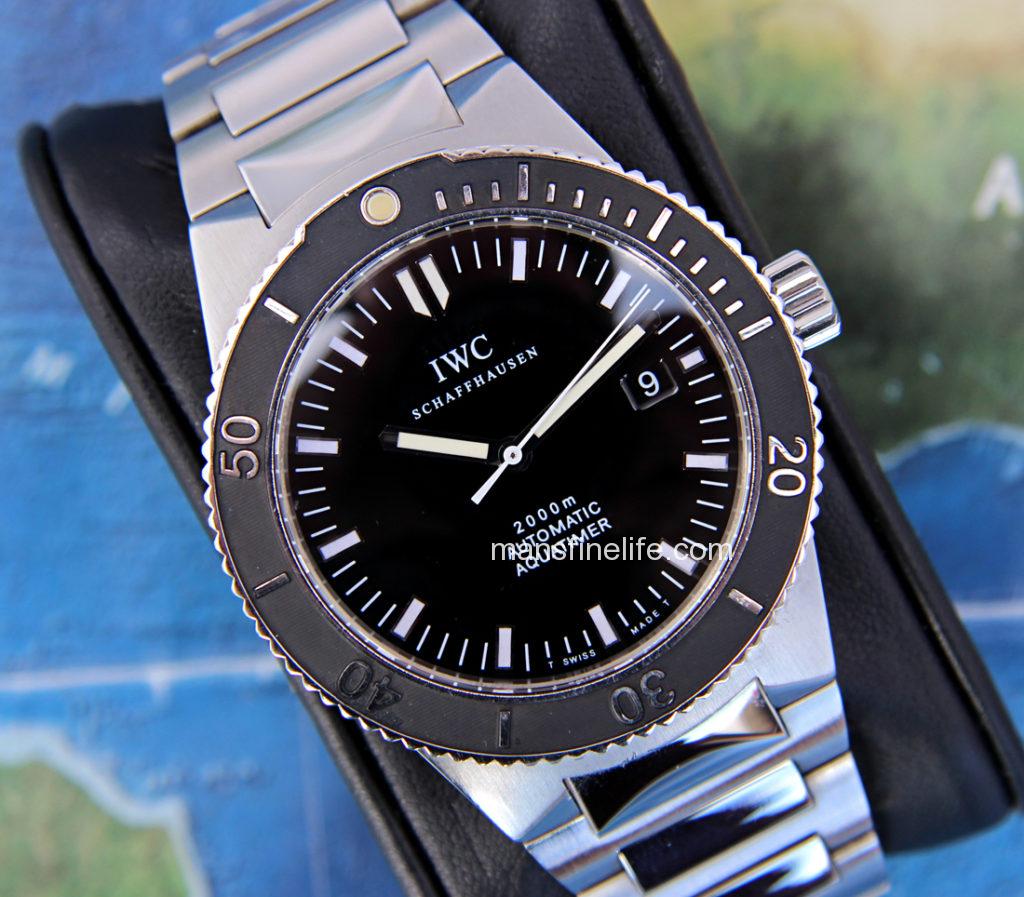
The weather may have finally turned truly chilly but that only prompts thoughts of heading to a beach somewhere to enjoy some sun, sand and surf while everyone back at home freezes their you know whats off. And on offer this month is the perfect watch to accompany you on any Caribbean or South Seas getaway you may have planned — a late 1990s IWC Aquatimer 2000 GST ref. 3536.
This example of long discontinued and long admired professional grade dive watch has the more uncommon stainless steel case (most were made in titanium) with matching fantastically designed integrated bracelet. Better yet, this true tool watch from the great Schaffhausen marque comes complete with inner and outer boxes, manuals & IWC guarantee card (in Japanese), bracelet tools and a couple of extra links.
This example of 3536 features a rare mixed-media partially Tritium dial and hands. IWC did a very interesting and peculiar thing on the earlier examples of this model where they used Trit luminous for the “12” marking and for the hands (as well as the bezel pip) but Luminova luminous for the other dial markers. Odd & eccentric but kind of cool and sort of unique to IWC as far as I can tell. This version of Aquatimer dial has a real form follows function look to it and I greatly prefer the all-business, almost military style of this 3536 dial, especially with the Trit elements, to those models in the line that came after it.
Running like a top and ready for action this big steel IWC Aquatimer 2000 GST is ready for any aquatic adventure you’re likely to dream up. And if you find yourself stuck here in wintertime at least you can console yourself with a stylish, tough and rapidly-becoming-vintage classic on your wrist that can stand up to digging your car out of a snow drift and still help you cut a fine figure when you finally make it your office or evening’s engagement.
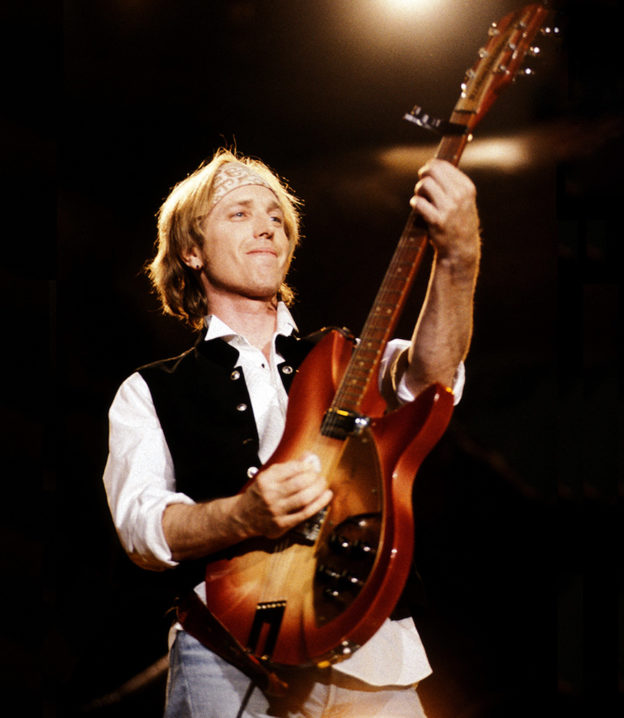
The untimely death of the great Tom Petty a few weeks ago forces us to look back in wonder at his amazing career and his frankly unbelievable trove of fantastic songs. There are very few American artists in any popular song-making genre who were able to sustain such a prodigiously satisfying output while also experimenting within what was ultimately a singularly unique personal style. Dylan, of course, and probably Springsteen and Paul Simon. But after that I’m at a loss.
Love Is A Long Road
“Love Is A Long Road” is a sterling example of Petty remaining true to his earliest rock instincts even while pursuing new artistic directions. Off of his first solo album, 1989’s Full Moon Fever, and relased at the height of his collaboration with his Traveling Willbury’s bandmate, Jeff Lynne, the song is a standout among such blockbuster hits as “Free Fallin’,”“Running Down A Dream” and “I Won’t Back Down” precisely because it doesn’t resemble them. Rather, it’s classic Tom Petty & the Heartbreakers, less slick and more emotional than those other chart toppers. You can draw a straight line from earlier dark horse standouts like “A Woman In Love (It’s Not Me)” and “Straight Into Darkness” right to “Long Road” and clearly see its intense similarity by way of raw emotion and well-constructed gritty rock dynamics. It’s also a wonderful showcase for Petty’s uniquely evocative voice and it’s no wonder it remained an Easter Egg-like staple in his live arsenal even though the song never charted.
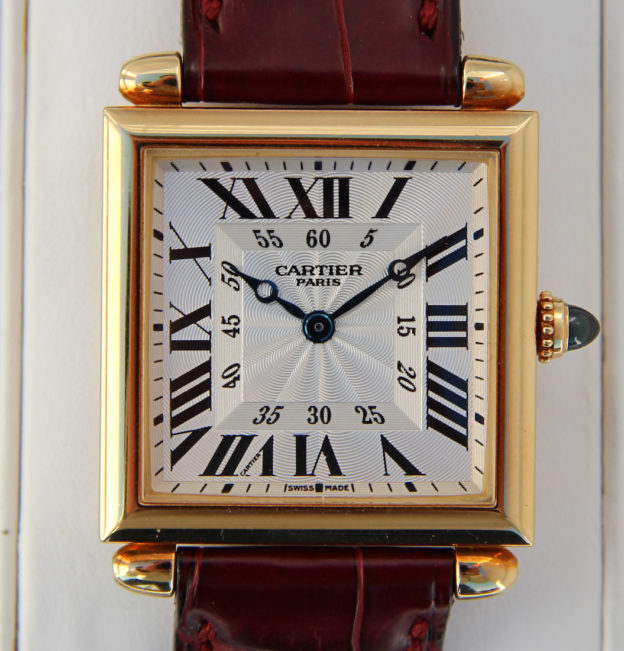
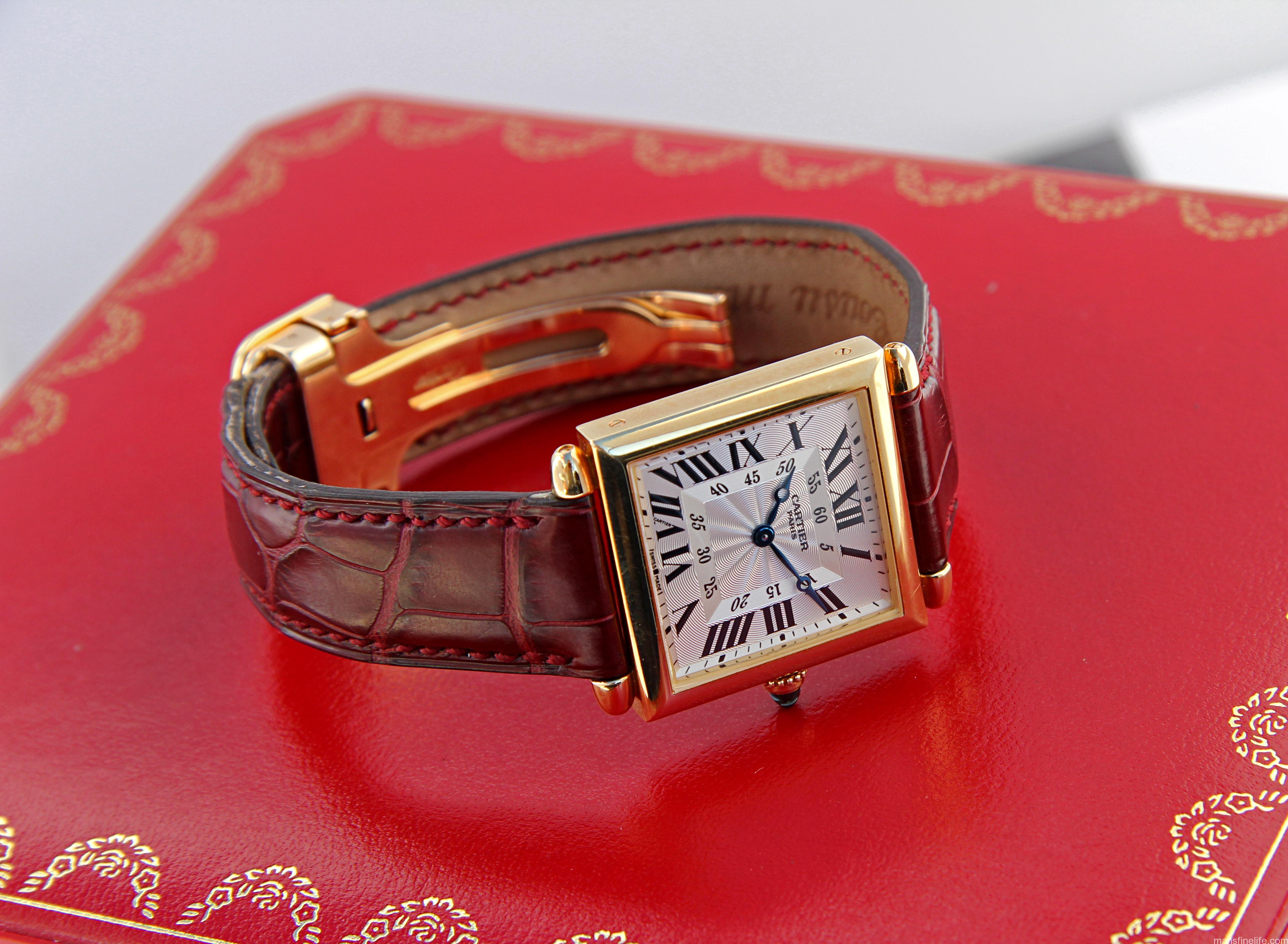
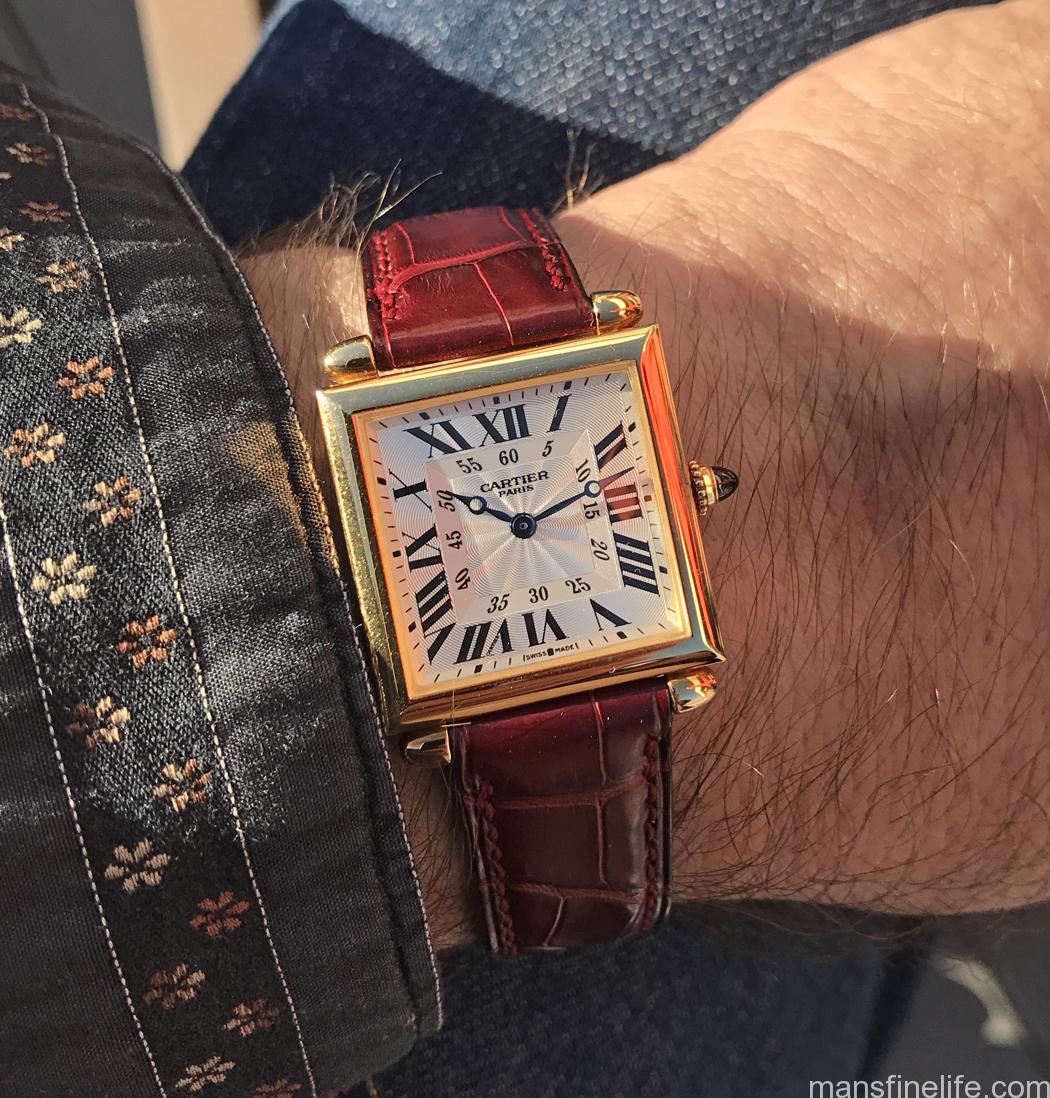
The weather is finally cooling down and there is a definite chill in the air as we hit mid-October. At long last it’s now the season for dressing up in handsome sweaters and vests, sports jackets & suits. And that makes my latest offering just about as fitting for these finer sartorial months as a Savile Row suit. It’s a very uncommon and drop dead gorgeous men’s Cartier Tank Obus in solid 18k Yellow Gold featuring a stunning silver guilloché Roman numeral dial and high-grade manual wind movement.
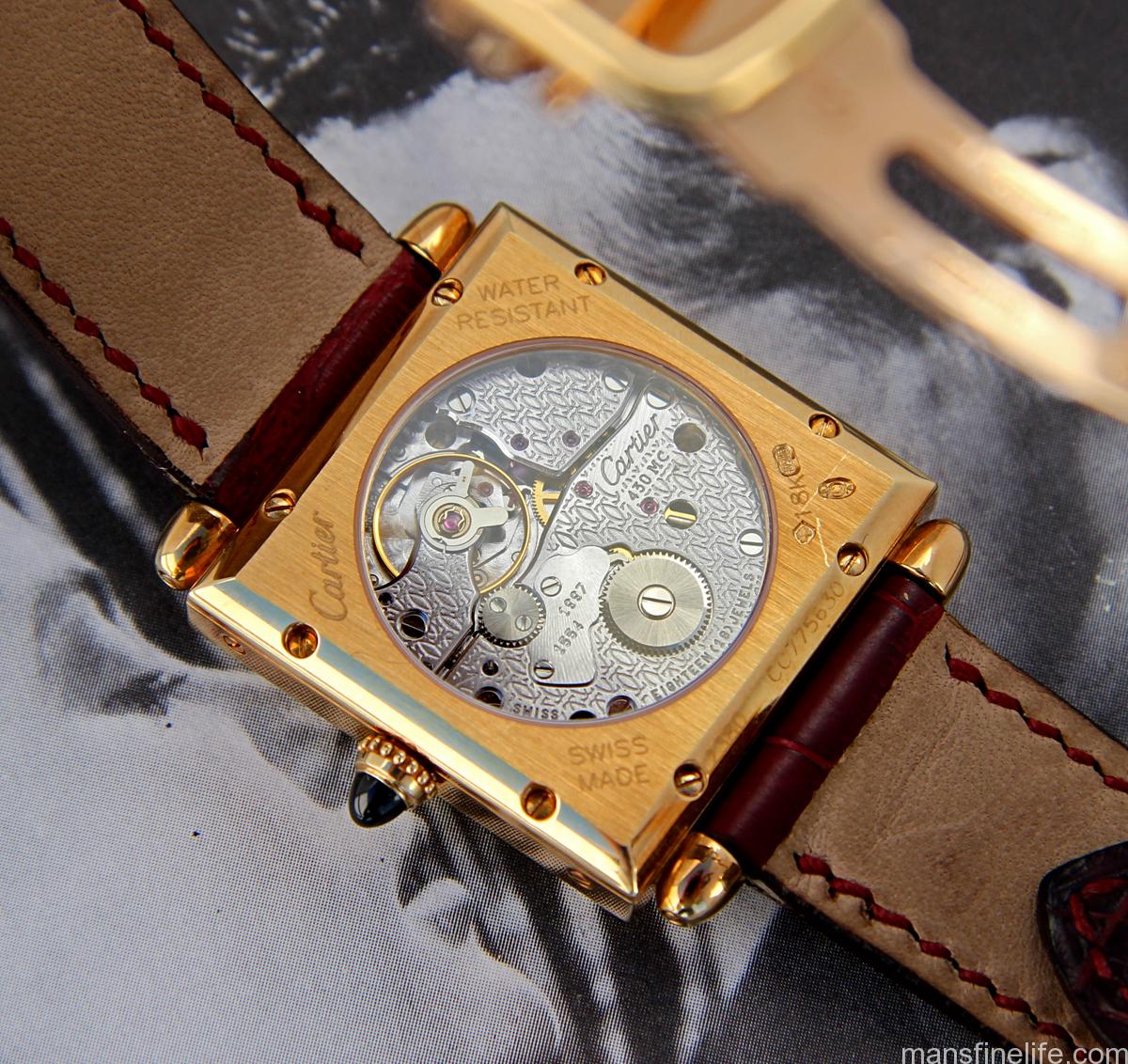
What makes this model so special is that it is part of the now discontinued and dearly loved Collection Privée Cartier Paris (CPCP), which was produced in limited numbers from the late 1990s until the early 2000s, and marked the return of Cartier utilizing truly high quality movements again after many years in the ETA and quartz wilderness. Not to be confused with the common plain quartz versions strewn across the internet, this scarce CPCP Obus (reference W1527551, I believe) features Cartier’s caliber 430 MC, a highly decorated version of Piaget’s fine ultra-slim cal. 430P.
The elite CPCP collection also mined Cartier’s storied past for the special models created. In this case, the Tank Obus was originally designed in the late 1920s and furthered Louis Cartier’s fascination with modern weaponry as design inspiration with it’s stylized bullet-shaped lugs (“obus” means shell in French, as in artillery). This classic mid-size men’s dress watch is in really excellent pre-owned condition and with its unique, well-engineered screwed case and gorgeous “Lotus” pattern dial is absolutely stunning on the wrist.
For the man who prefers the understated elegance of a smaller watch combined with the timeless avant-garde design that is Cartier’s hallmark this fantastic Obus is guaranteed to fit the bill. Strap it on and see it enhance your entire style game just like that!
We here at Man’s Fine Life are deeply saddened by the untimely passing of Rock and Roll Hall of Famer Tom Petty at the age of 66 after a cardiac arrest at his LA home on October 2. The Rolling Stone obituary is here.
Tom Petty was one of the best of the straight-ahead American rock ‘n rollers to come out of the 1970s, arguably forming a triumvirate with Bruce Springsteen and Bob Seger that spearheaded a rebirth of singer-songwriter rock with a gritty edge characterized by narrative lyrics about the common man and impeccably crafted tunes played by top notch bands. It’s easy to forget just what that meant at a time when it looked like conventional blues-based rock was on the wane due to the onslaught of Disco, Heavy Metal, Wus Rock (Firefall, Dan Fogelberg, Bread, et al) and Punk. But like Springsteen and the E Street Band and Seger and the Silver Bullet Band, Tom Petty and the Heartbreakers recaptured traditional fans of rock and made legions of new ones with whole albums full of catchy singles suffused with the passion of the true believer in the redemptive power of Rock.
Petty and the Heartbreakers started off with a bang way back in 1976 when they had Top 40 hit with the sinuously assertive “Breakdown” and a very influential non-hit with the Byrds-inflected “American Girl” on their eponymous debut album (legend has it that people were calling up Roger McGuinn to see if it was his new single). With Petty’s oddly effecting trademark nasal delivery and 12-string Rickenbacker, Mike Campbell’s stinging lead guitar, Benmont Tench’s pivotal swirling organ adding uncommon depth and the rock solid rhythm section of the late Howie Epstein on bass and Stan Lynch on drums, the original lineup seemed to emerge as a finely tuned outfit from day one and never took their foot off the gas for the next few years. Their consistently excellent efforts culminated in one of the decade’s best albums, Damn the Torpedoes, in 1979. With such all-time classic as “Refugee,” “Don’t Do Me Like That,” “Here Comes My Girl” and “Breakdown,” Torpedoes was an artistic and commercial smash, going 3-times platinum with over three million in sales.
The band entered the 80s with two more fine releases — Hard Promises (1981) and Long AfterDark (1982)– that, while not as successful as Torpedoes, still solidified their rep as major hit makers and one of the most important acts around. Then came Southern Accents in 1983. A beautiful album with a very troubled recording process — Petty broke his hand badly punching a wall in frustration during the mix of the lead single “Rebels” — Southern Accents was originally conceived as something of a concept album by way of an exploration Petty’s “red neck” Florida roots. Other than a general thematic similarity the songs on Accents do not quite add up to a concept album, perhaps because it was trimmed down from a double LP. But it is beautifully produced, significant for its lyrical ambitions and ultimately lovely and artistically satisfying. It hit platinum and so was also successful commercially. But Petty considered it a noble failure and for him the album never quite lived up to the magnum opus that he had in his head when he conceived it.
Southern Accents and the strains of making it marked a true turning point and after that Petty and the band changed subtly but significantly, as if the reach for something grander and more profound had led instead to a sort of artistic burnout. After Petty’s rehab and recuperation from his self-inflicted wound, as well as drug issues which would continue to plague him in the years to come, the music became much simpler and more stripped down if no less radio friendly. On the full band’s Let Me UP (I’ve Had Enough) (1987) and Into the Great Wide Open(1991), as well as Petty’s smash solo album Full Moon Fever (1989), the narratives became more detached, the characters observed from a distance for the most part rather than from within their skins as had been the case on the band’s earlier material. The songs seem more programmatic, more LA and less Gainesville, and frankly, from an artistic standpoint, less interesting. There’s a less nuanced, less bluesy feel overall that sacrificed some complexity for a more universal “rock” sound, which ironically hasn’t aged as well as the earlier hits. If it marked a return to the basic pleasures of the straight-ahead 3-minute single the updated style clearly seemed to abandon much of the passionate involvement of the earlier 1970s music.
His work with the enjoyably light supergroup The Traveling Wilburys, where he teamed up with other legends like Bob Dylan, Roy Orbison, George Harrison and ELO mastermind and super producer Jeff Lynne, to create one of the surprise hit albums of the late 1980s seemed to confirm that Petty was done taking things too seriously and suffering for his art. From here on out it would be all rock, no angst, jamming with friends, playing the hits live and just generally enjoying being one of the world’s most successful rock musicians. Petty evolved into a wryly funny wise old hand with hooded eyes and his trademark deadpan drawl, almost a different person from the strangely sharp featured, almost androgynous angry young rocker of the early days.
And who could blame him for that transition from hot blooded rebelliousness to satisfied professionalism? Taken in its entirety the music is still good and highly enjoyable in the later 80s and 90s. But that earlier stuff is where the magic still shines and resonates in a timeless way. Those first 9 years were a remarkable run and stand up with the creative output of pretty much any Rock artist of any era over that kind of sustained period of time. Of course there are probably fans who fall into the other camp and prefer the later, lighter stuff. But for me I’ll take the music up to and including Southern Accents as peak Petty. It’s the music I grew up with and the music I still reach for and play with pleasure.
https://www.youtube.com/watch?v=ETHdszZQZDE
Personal preferences aside, one thing’s for sure — Tom Petty was a great rocker and well deserving of his Hall of Fame status. He was a music giant who will be sorely missed and the world is poorer for his passing. But the gift of his music lives on as one of the real high water marks in Rock & Roll because Petty was one of the genuine originals in a genre where that’s about as rare as hen’s teeth. Godspeed, Tom, and thanks for the terrific tunes.
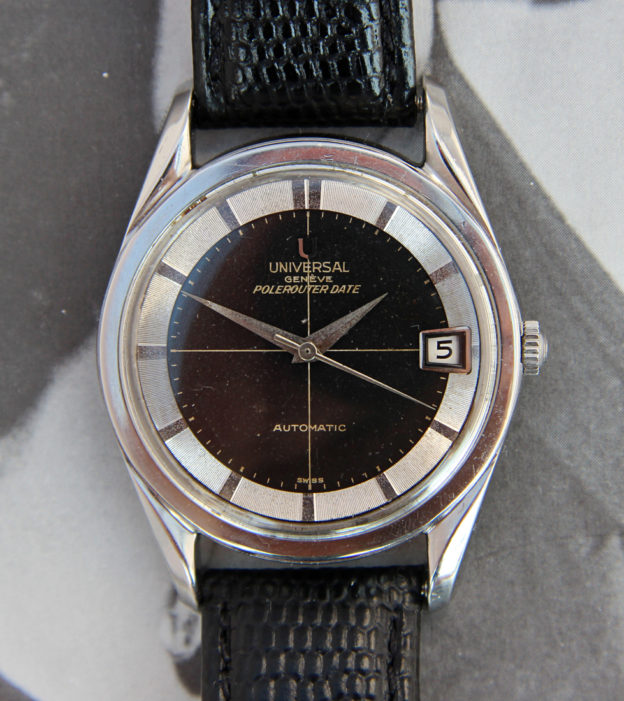
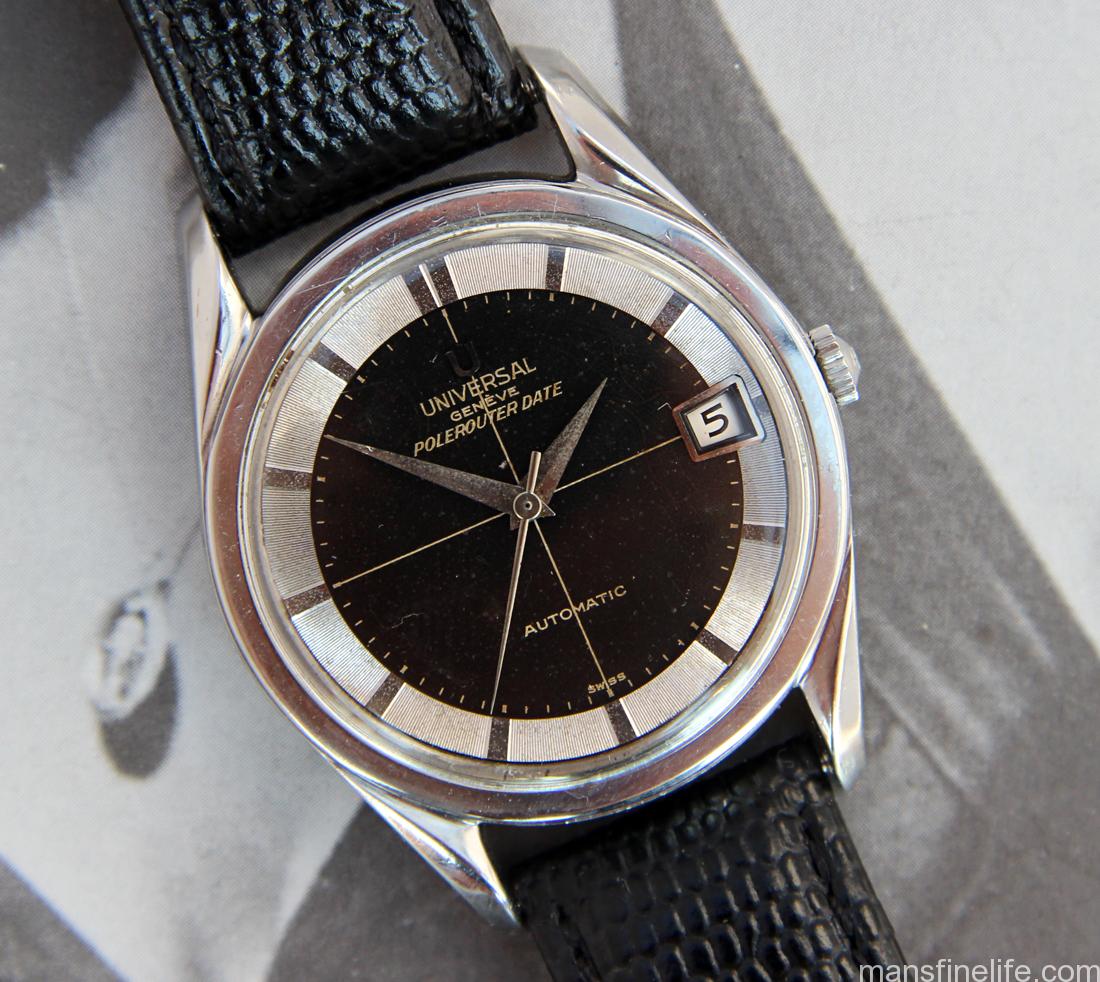
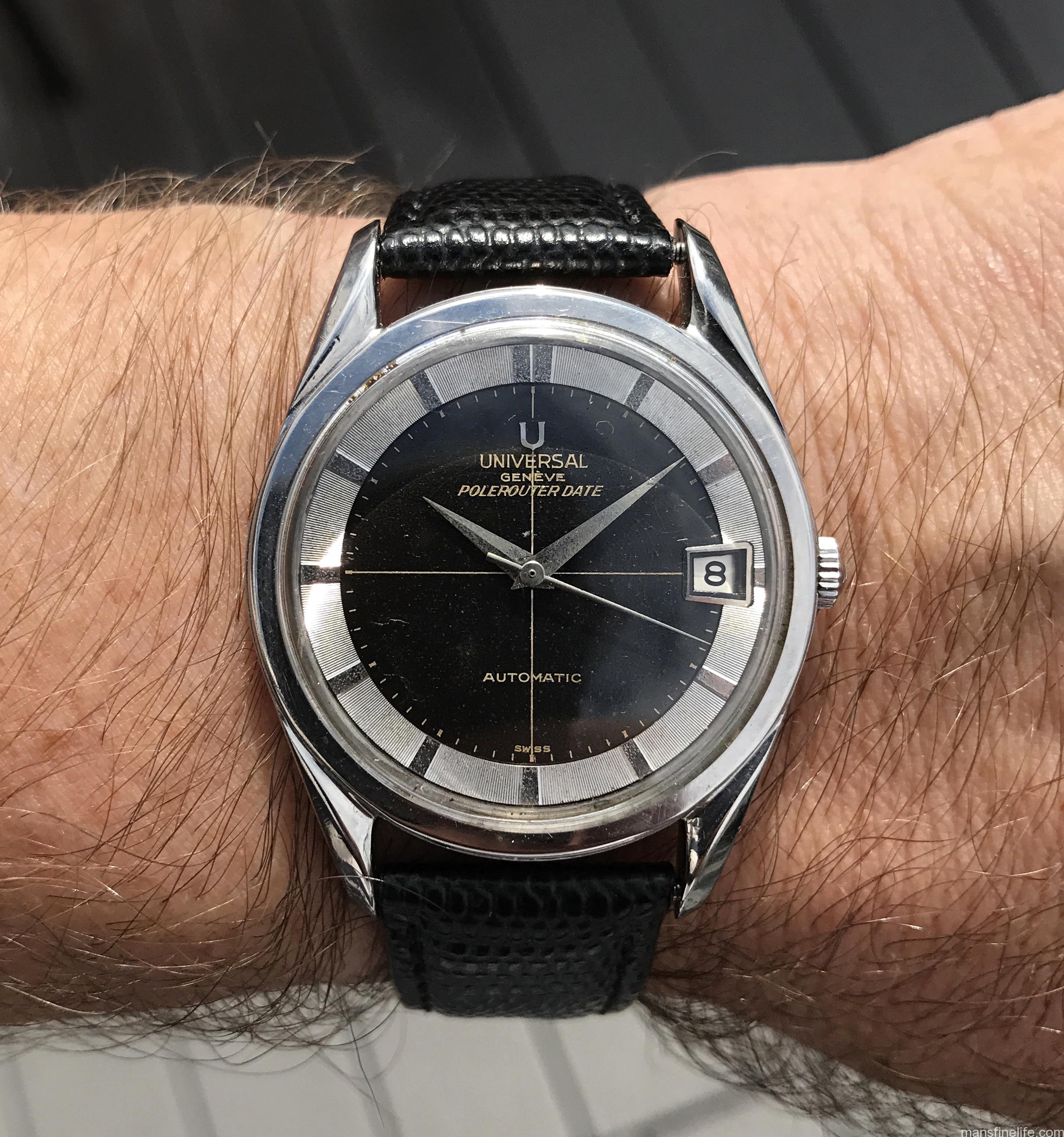
My second offering in September is nevertheless a premier watch — a classic early 1960s Universal Geneve Polerouter Date with stunning black gilt-gloss dial and trademark Speedmaster-style twisted lug case (both watches shared the same case maker back in the day). Said to be designed by the great Gerald Genta himself in his early days — the legend behind such later icons as the Royal Oak and the Nautilus — these early Polerouters are getting harder to find in good condition and more & more desirable overall.
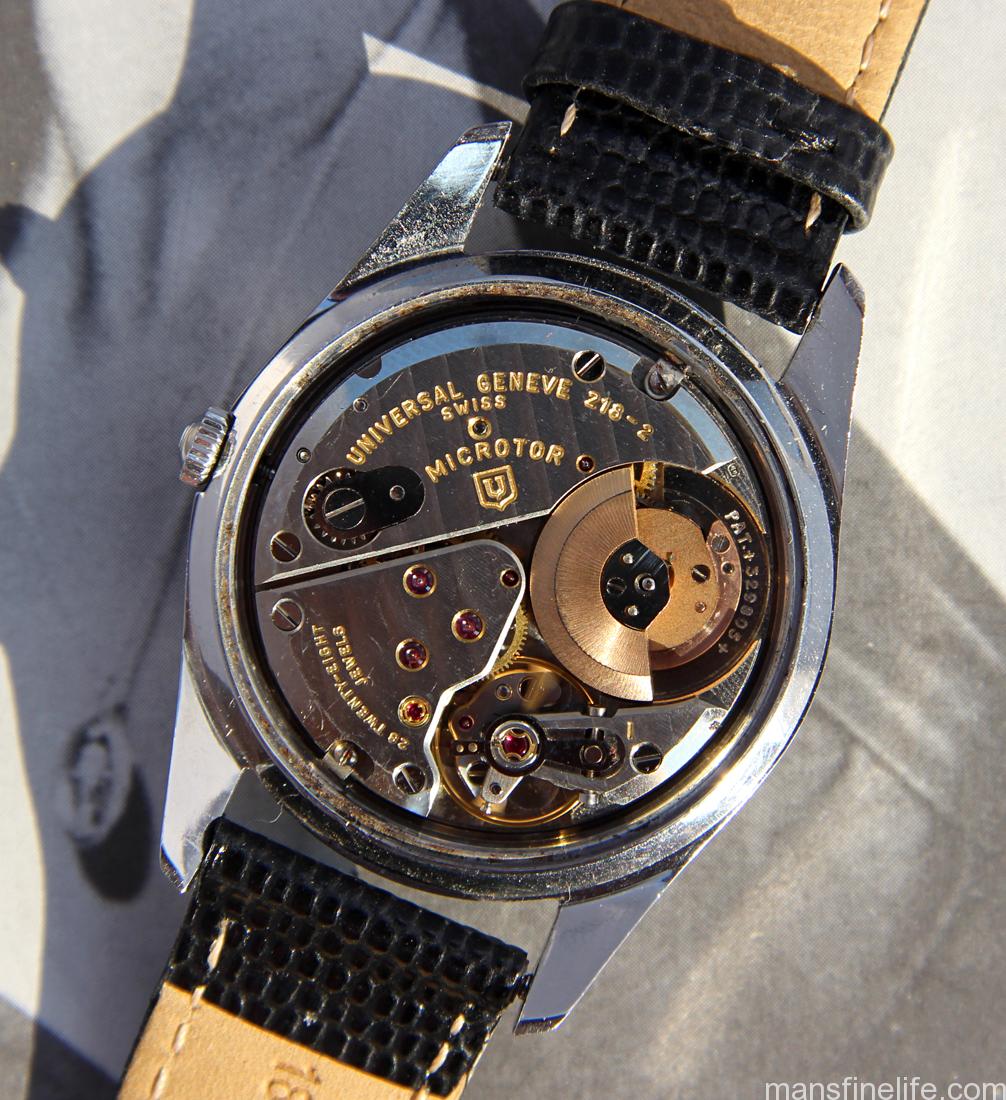
And with good reason. The Polerouter was made tough with a high quality steel screw back case for water resistance and gained its name keeping good time for Scandinavian pilots flying over the highly magnetic North Pole shortcut in the 1950s. The Polerouter was also made innovative, as Universal quickly came up with a revolutionary micro-rotor system of automatic winding, their own proprietary Microtor, to reduce the thickness of the movement and therefore the watch. This winding system was so clever and ahead of its time that Patek Philippe revisited it in the modern era to legendary — and legendarily expensive! — effect.
Most of all the Polerouter was made super stylish courtesy of Mr. Genta. With its two-part dial composed of gorgeous black gilt-gloss crosshair interior and machined textured calibrated silver outer track, this Polerouter Date is nothing short of a stunner. Most of these dials have deteriorated badly and while this one does show a little of its age it’s still in really fine condition with crisp printing and wonderfully warm vintage charm. Equally well-matched with a suit and tie, an Oxford or a faded T this classic Polerouter is a fine companion for any occasion. But hurry — just as time waits for no one this legendary vintage icon is priced to fly away quickly!
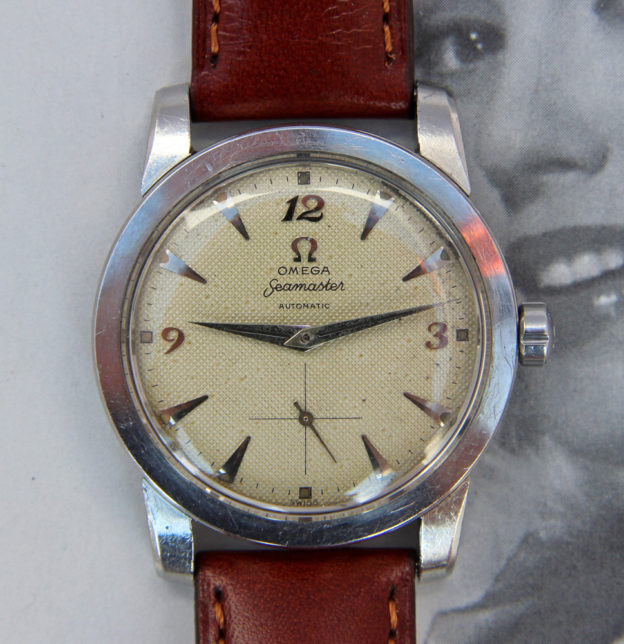
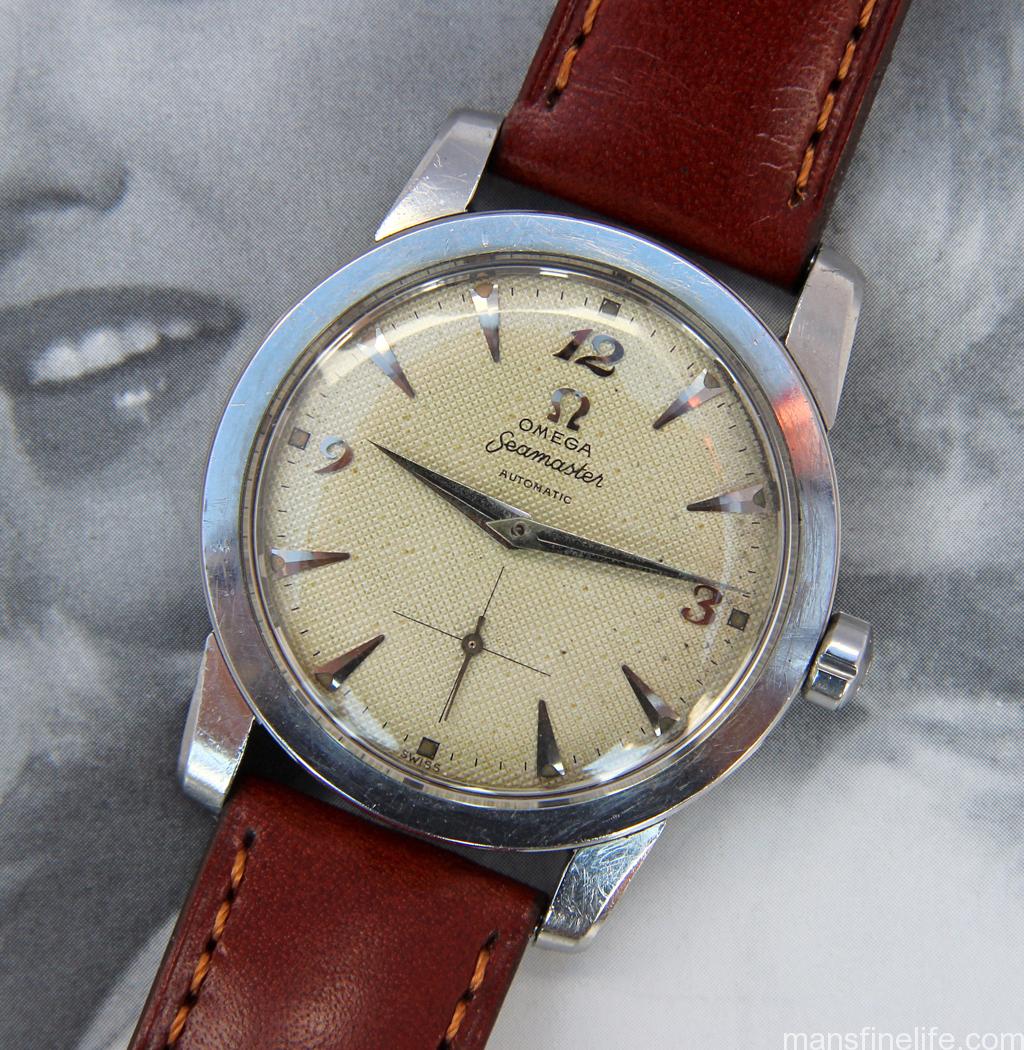
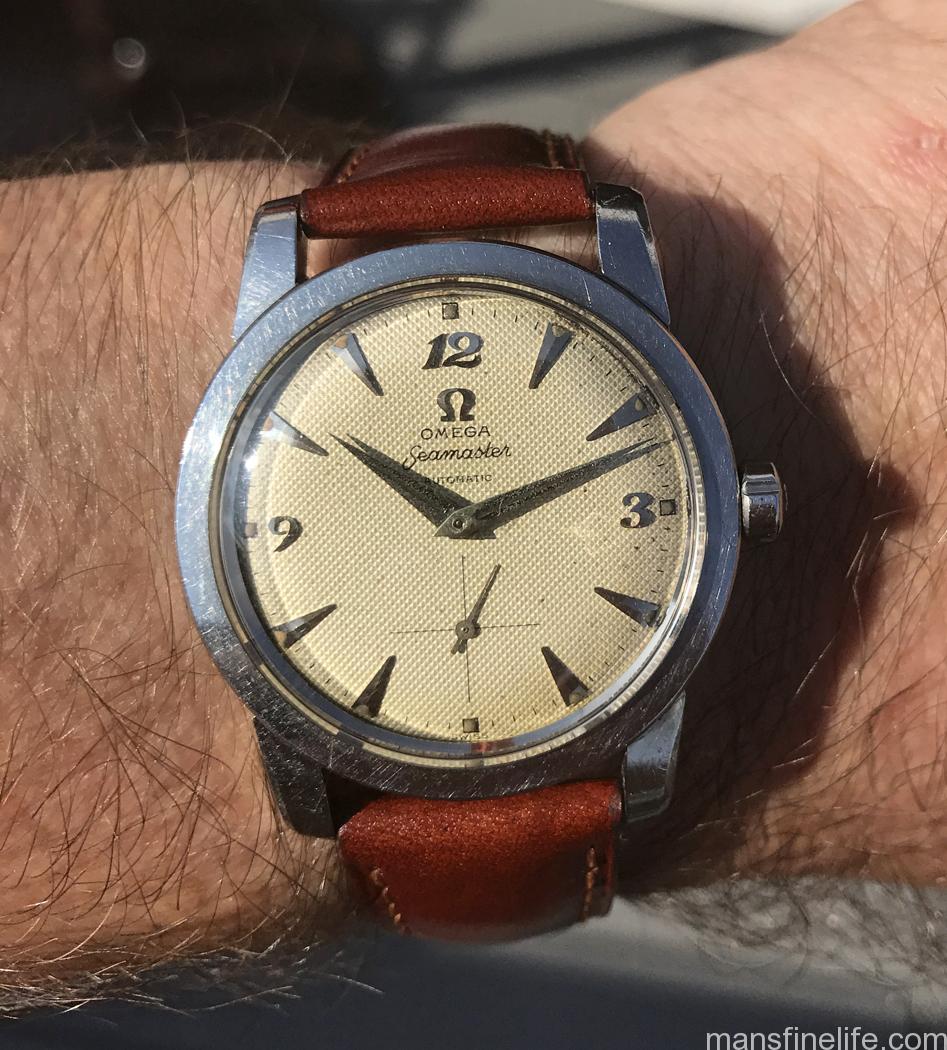
As we leave summer behind and head into fall it’s a great time to break out vintage dress watches that can compliment the more sophisticated styles that autumn entails. And it doesn’t get much classier than this beautiful early 1950’s Omega Seamaster in classic “Beefy Lug” case. This lovely reference 2576 features a handsome original waffle dial with Breguet numerals at “12,” “3” and “9” that has aged to a very attractive ivory hue. Check out the wonderful patina on the original radium lume.
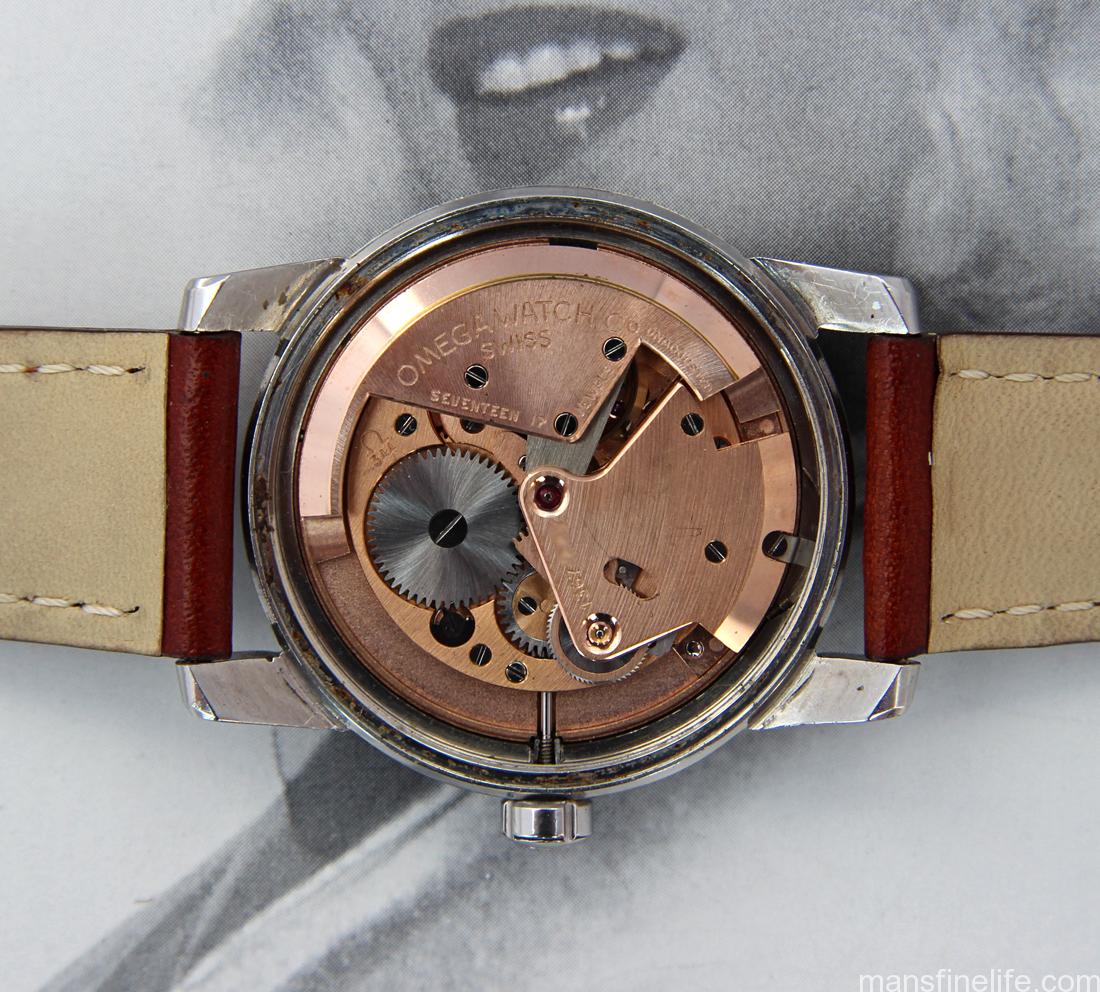
Also special, this Seamster’s all-steel water resistant 3-piece case doesn’t appear to have ever been polished. It’s rather special to see those handsomely chamfered fat lugs as the manufacturer intended them to be. Under the hood you’ll find Omega’s robust in-house bumper automatic caliber 344 movement, which hammers pleasantly when you move your wrist.
It all adds up to the complete vintage package: nicely proportioned, a super stylish layout and original, untampered-with condition. On the wrist this mega-charming classic mid-century Seamaster has unmistakable and timeless appeal. Whether you’re diving into a leaf pile or layering up with sweater and jacket for a night on the town this classy Omega will have you looking and feeling good.
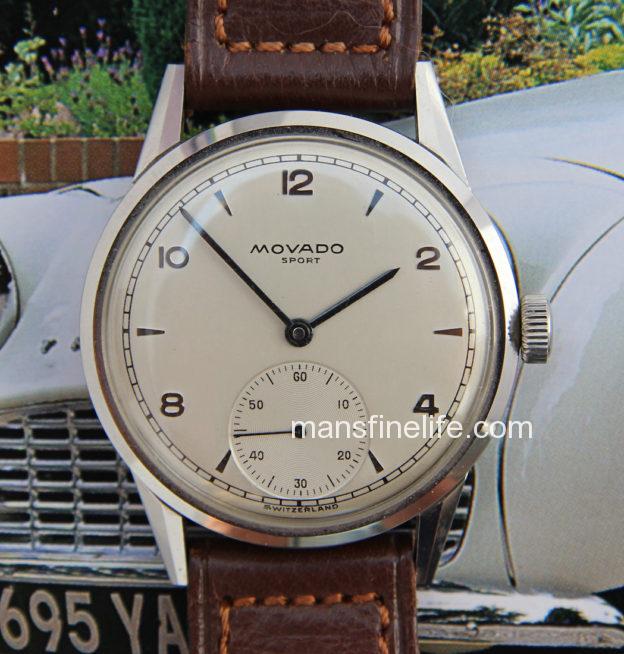
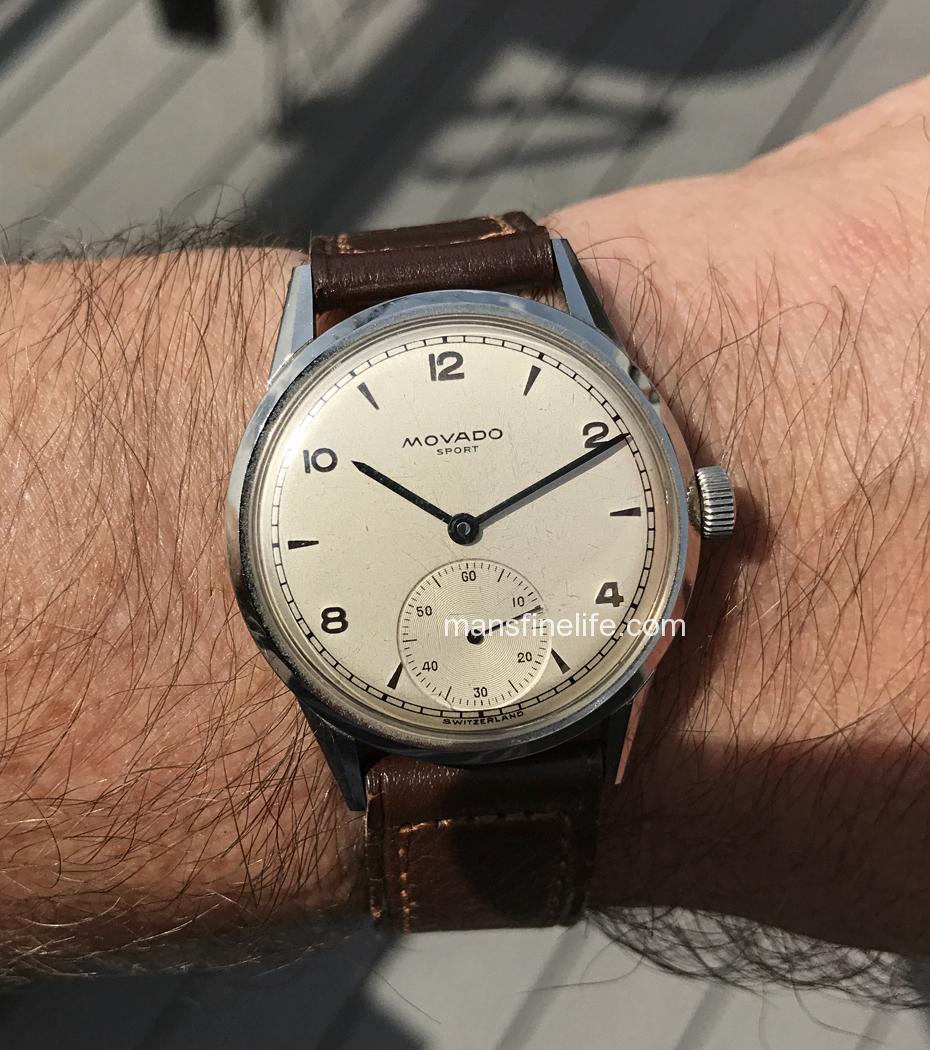
My lucky run of quality vintage watches for August just keeps on coming up aces with this gorgeous circa 1950s Movado “Sport.” This watch was part of a jeweler’s deadstock that he inherited when he purchased the business and it is in near pristine condition. It features a stunning original eggshell silver dial with elegant partial Arabic numerals and closed minute track.
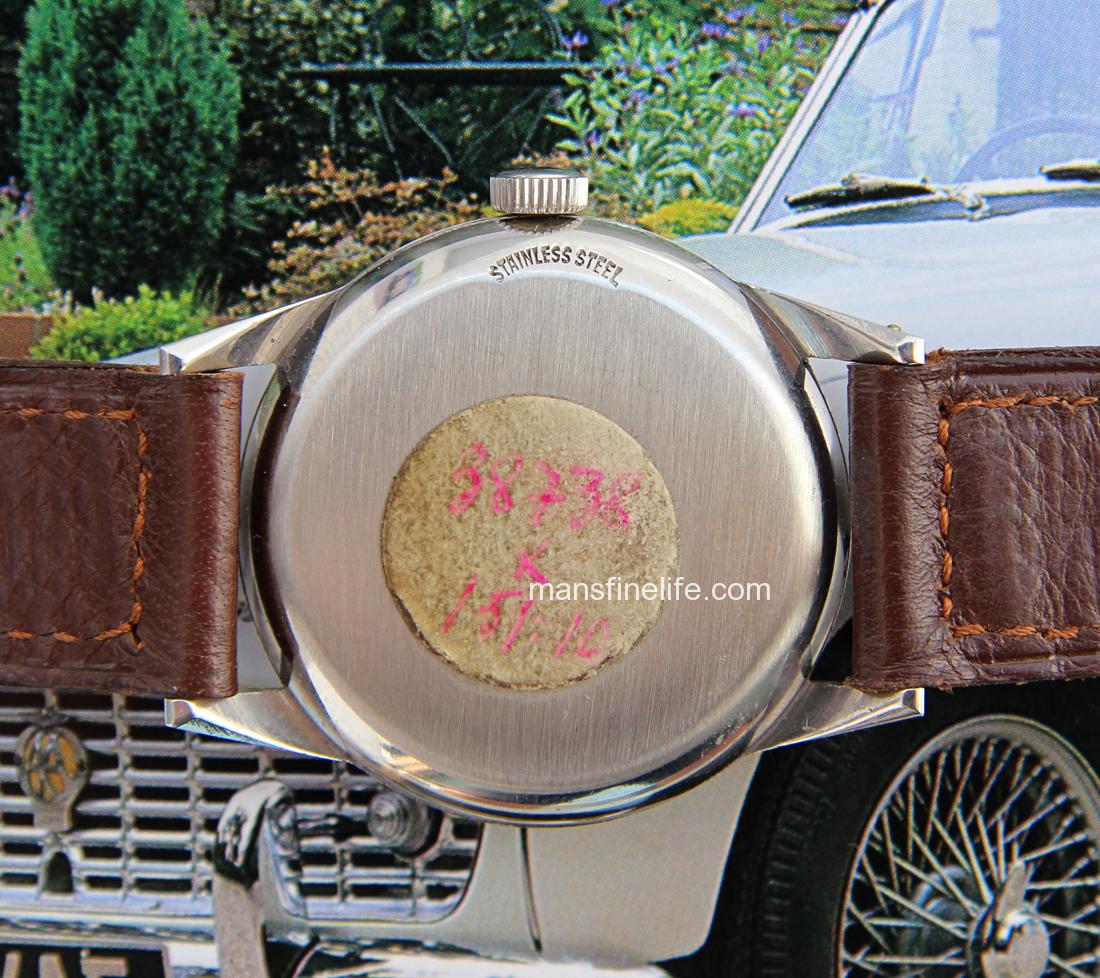
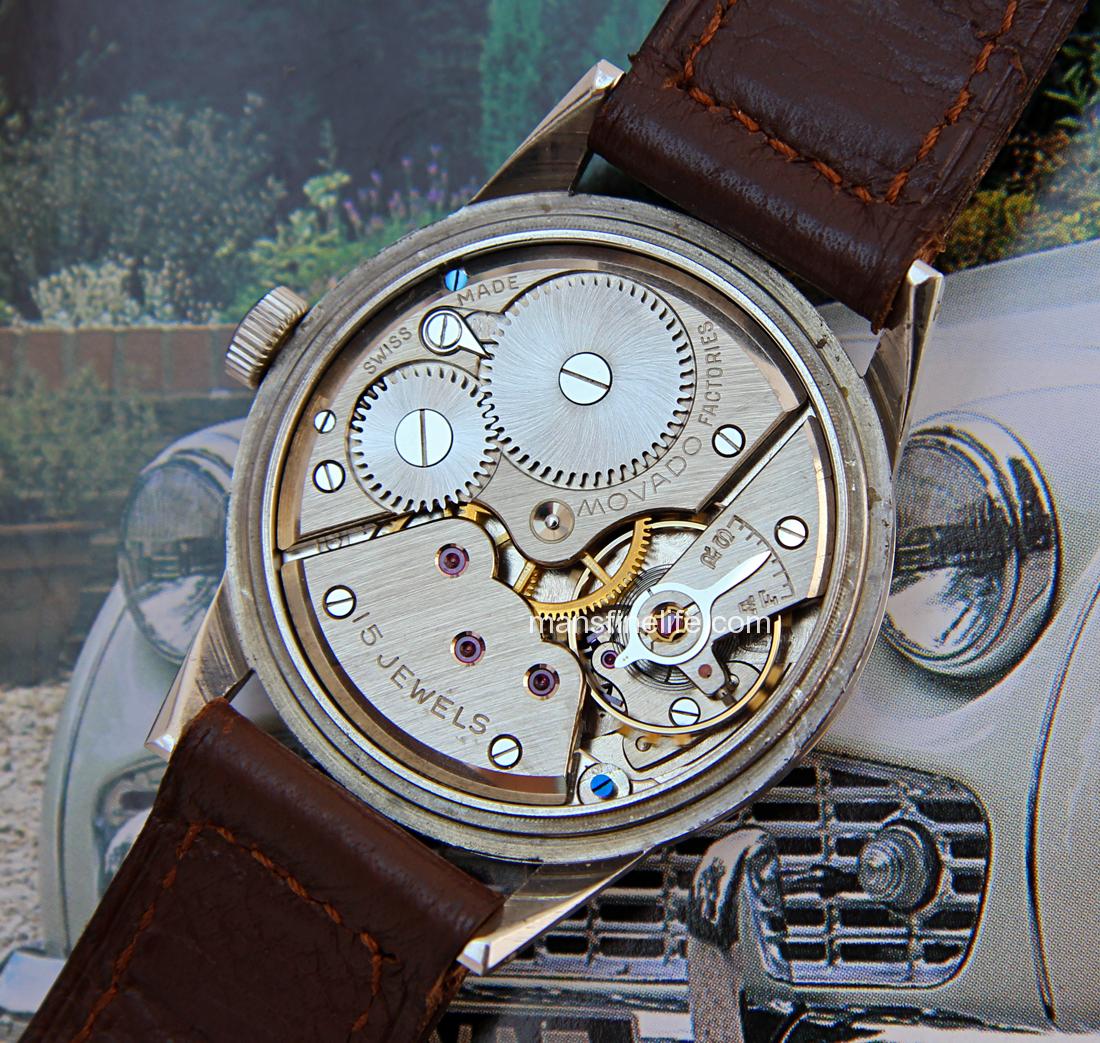
The beautifully designed 3-piece snap back all-steel case shows no signs of polish and the brushed and polished surfaces are pristine with razor sharp lugs. The outer caseback is marked for Stainless Steel and even has the original retailer’s price sticker on the back! This Sport is rather pleasingly over-engineered with an anti-magnetic dust cover protecting the movement. Can you imagine what a watch of this obvious build quality would go for if it said Patek on the dial instead of Movado?
Powering this vintage Sport is Movado’s high grade in-house Caliber 125 manual wind movement with 15 jewels and a nice oversized balance for greater accuracy. This is just an exceptionally well preserved watch with classic mid-20th century looks from one of the great houses of Switzerland. It all adds up to an uncommon opportunity to buy a time capsule sort of piece from 50+ years ago that you just can’t find every day. But if you act quickly you can make it yours and wear it everyday!
The love-as-a-drug metaphor doesn’t get anymore potent or direct than on the classic 1970s soul hit “Stoned Out Of My Mind” by the Chi-Lites. Led by the honey dripping tenor-falsetto of Eugene Record, who wrote most of their tunes, Chicago’s own sweet soulsters likened a bad relationship with a femme fatale to a drug or drinking binge. The results were a propulsive, horn-laden classic that made it to #2 on the Billboard R&B charts in 1973.
“Stoned” was such a quietly influential classic, in fact, that when Paul Weller was at the height of his Soul & R&B obsessions with The Jam he chose to cover it for the B-side to the band’s last single, “Beat Surrender,” in 1982. The result was a a more suave take on the original with Weller’s lowered pitch and cool to the point of almost lounge-y delivery giving the song a completely different yet pleasingly smooth vibe.
The Chi-Lites’ original has more grit and funk and The Jam’s cover more polish and finesse. Take your pick — either version is about as good of a “love is a drug” song as there is in the pop canon.
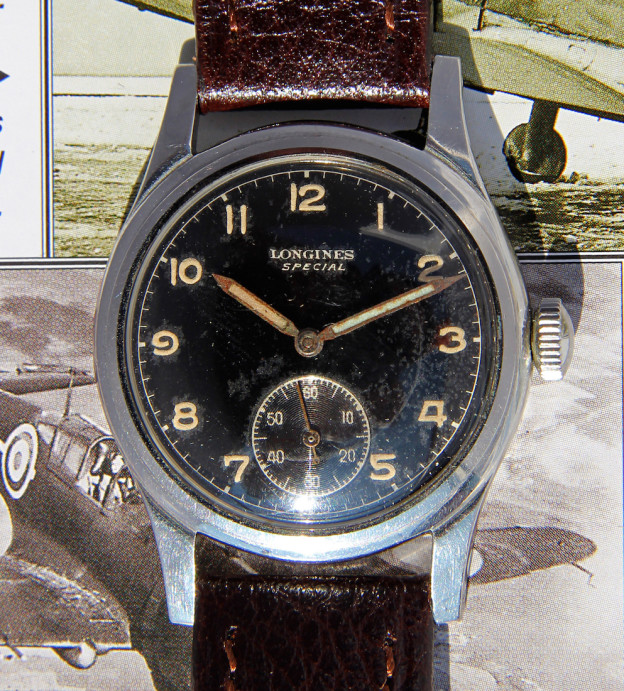
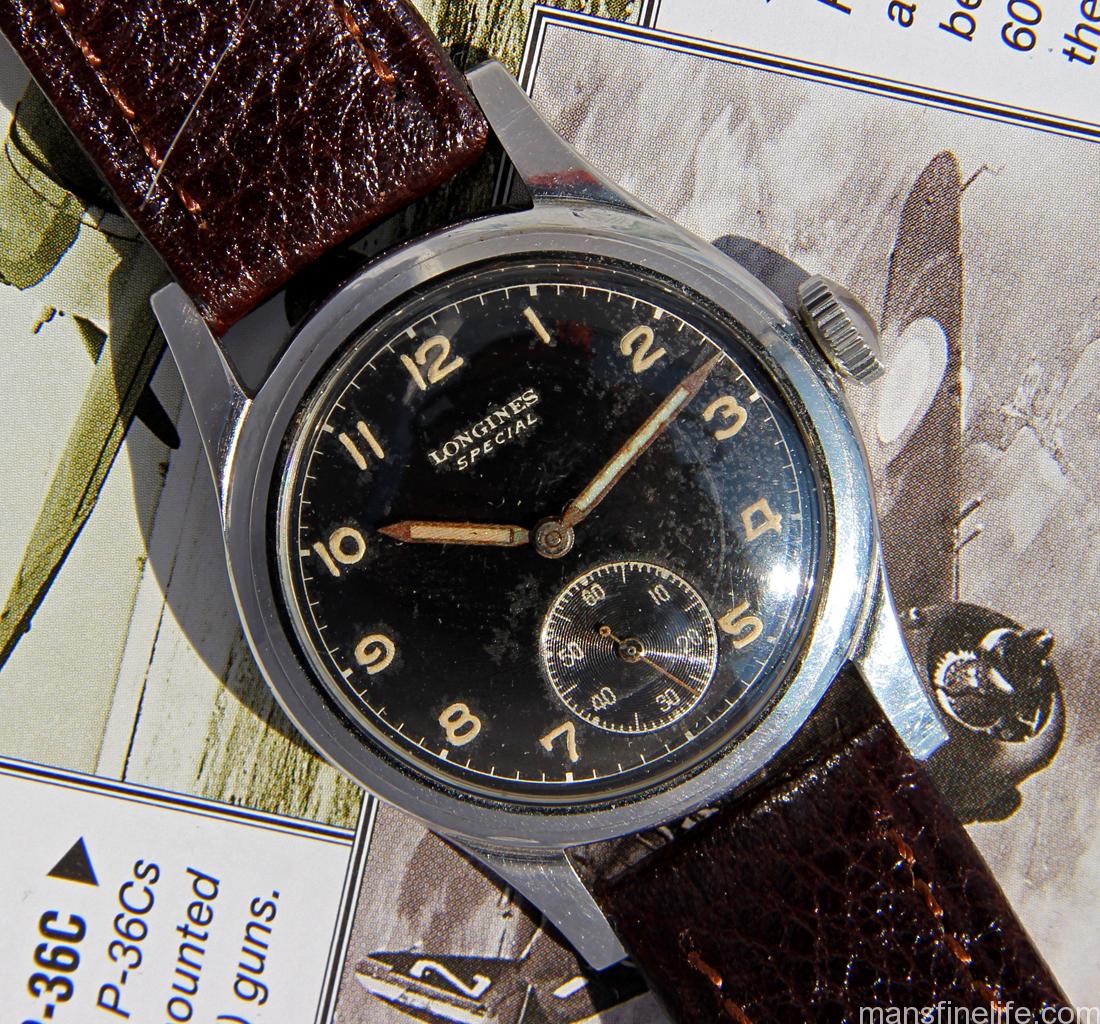
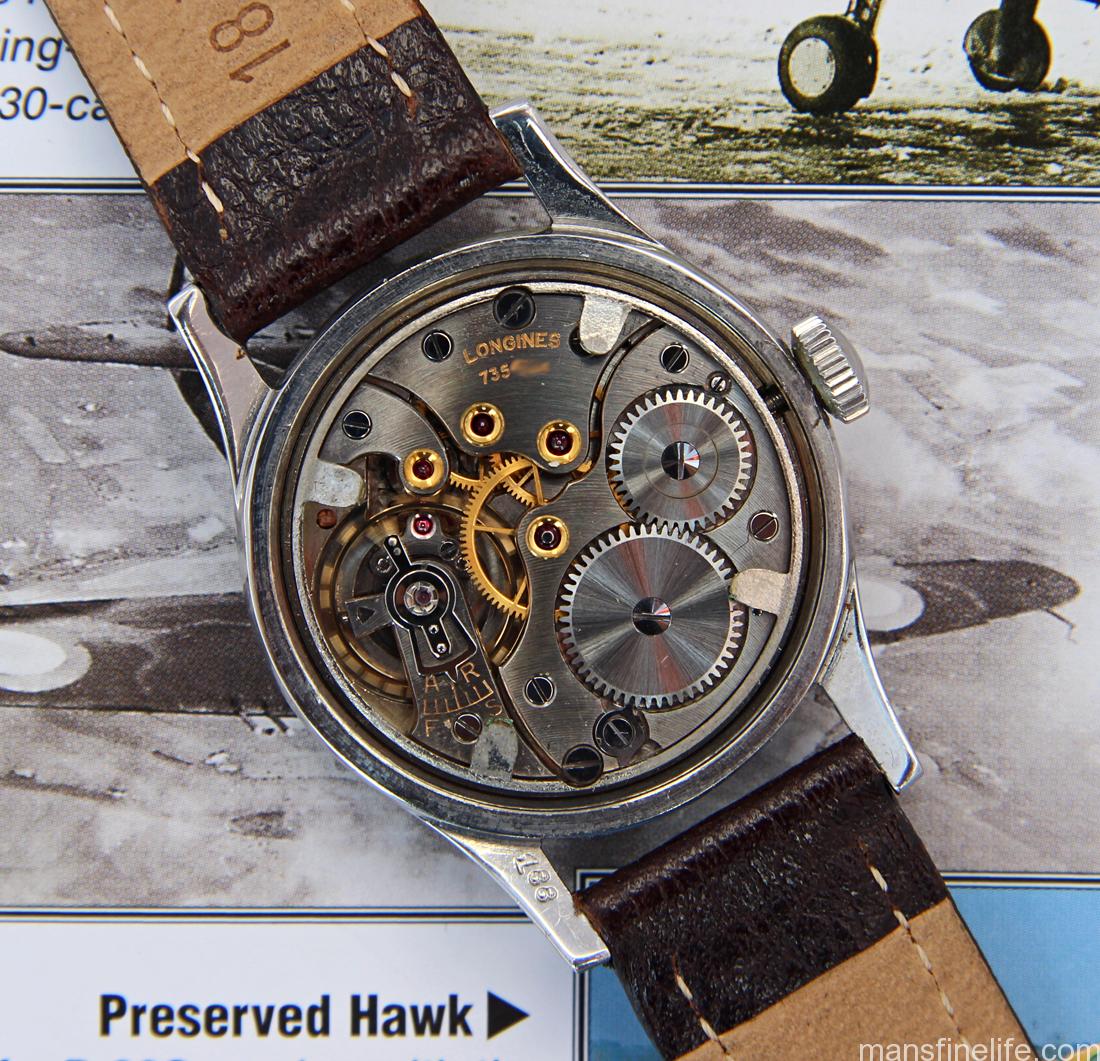
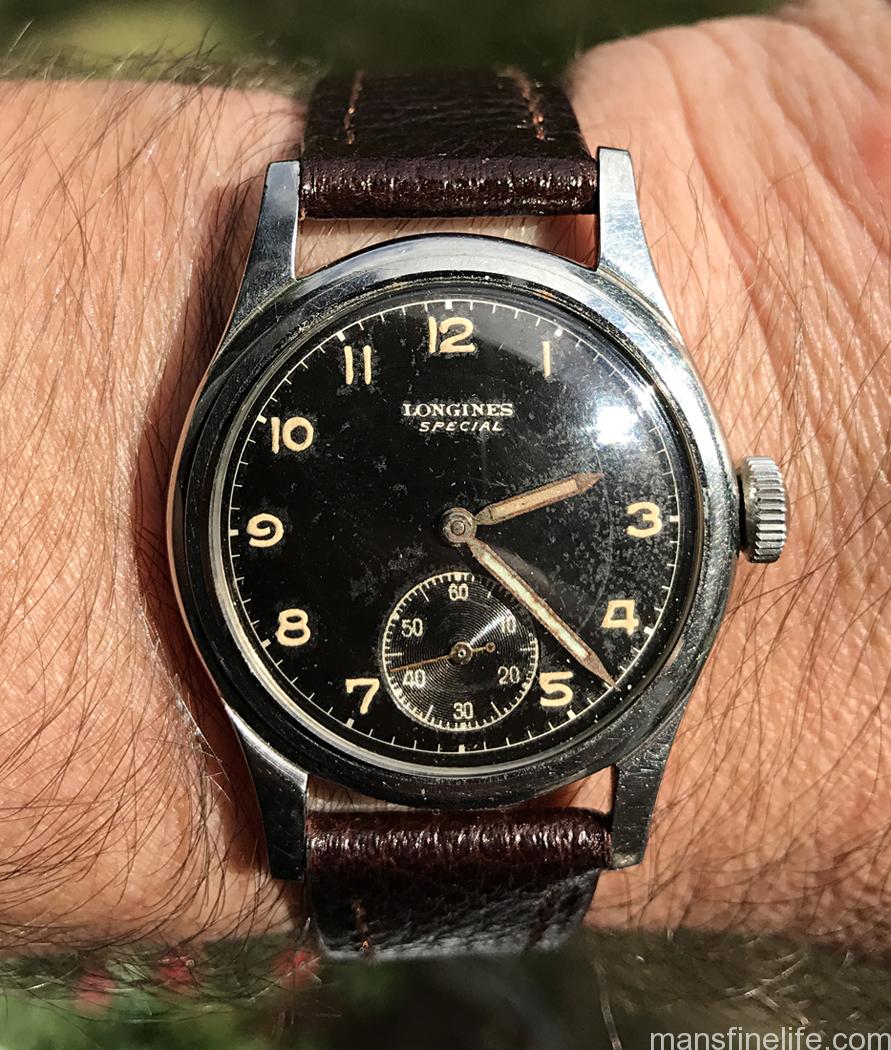
I promised more watch goodies for August and here’s another honey: a late 1940s Longines Special in all-steel “Sei Tacche” case. “Sei Tacche” is an Italian term that refers to the 6 notches for opening the screwed back just as “Tre Tacche”refers to water resistant Longines cases with only 3 notches. Both are highly coveted case styles for Longines watches.
Better yet though, in my opinion, is the drop dead gorgeous gloss black military style dial with wonderfully patinated Radium numerals, minute track and nicely delineated engine turned subsidiary seconds at “6.” Though I know of no military pedigree it is easy to imagine this dial was designed with sale to the armed forces in mind or at least certainly with the memory of Longines’ excellent WWII-era watches still echoing just a few short years later.
For in fact, I’ve already had written confirmation from Longines that this watch dates from 1948 and was originally sold in Sweden. It also features one of the great movements of that immediate post-War ear, the estimable in-house caliber 27M, no doubt a direct evolution of Longines’ vaunted 12L series.
Though not a big watch at around 33.5mm this Special is just that — true to its military forebears and an absolutely beautiful statement on the wrist with a primo engine under the hood. It’s got all the makings of a prime collectible. And one you can actually wear on a daily basis.
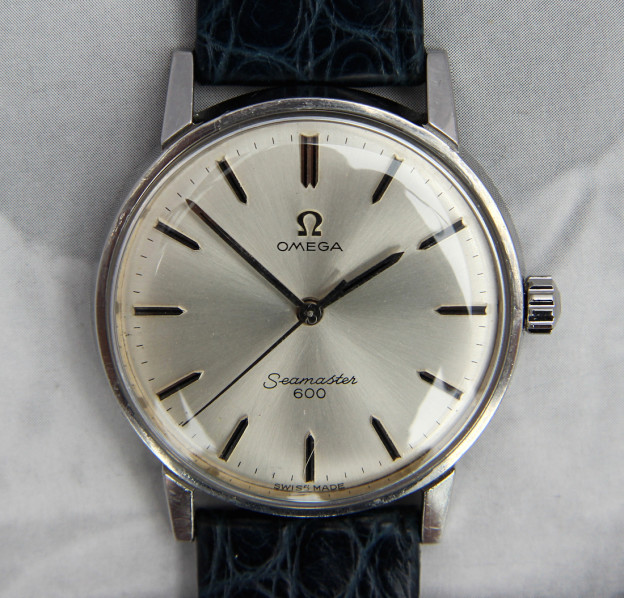
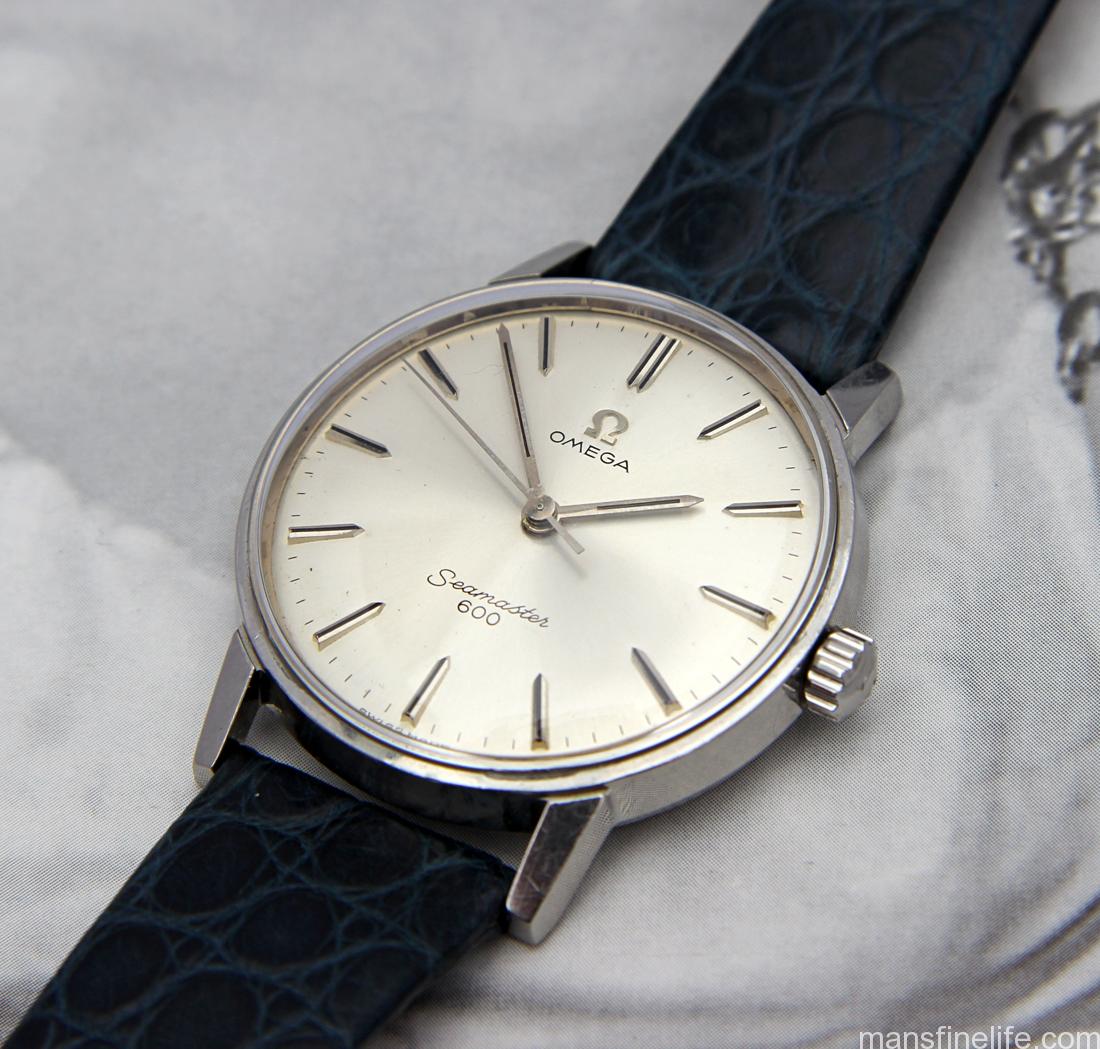
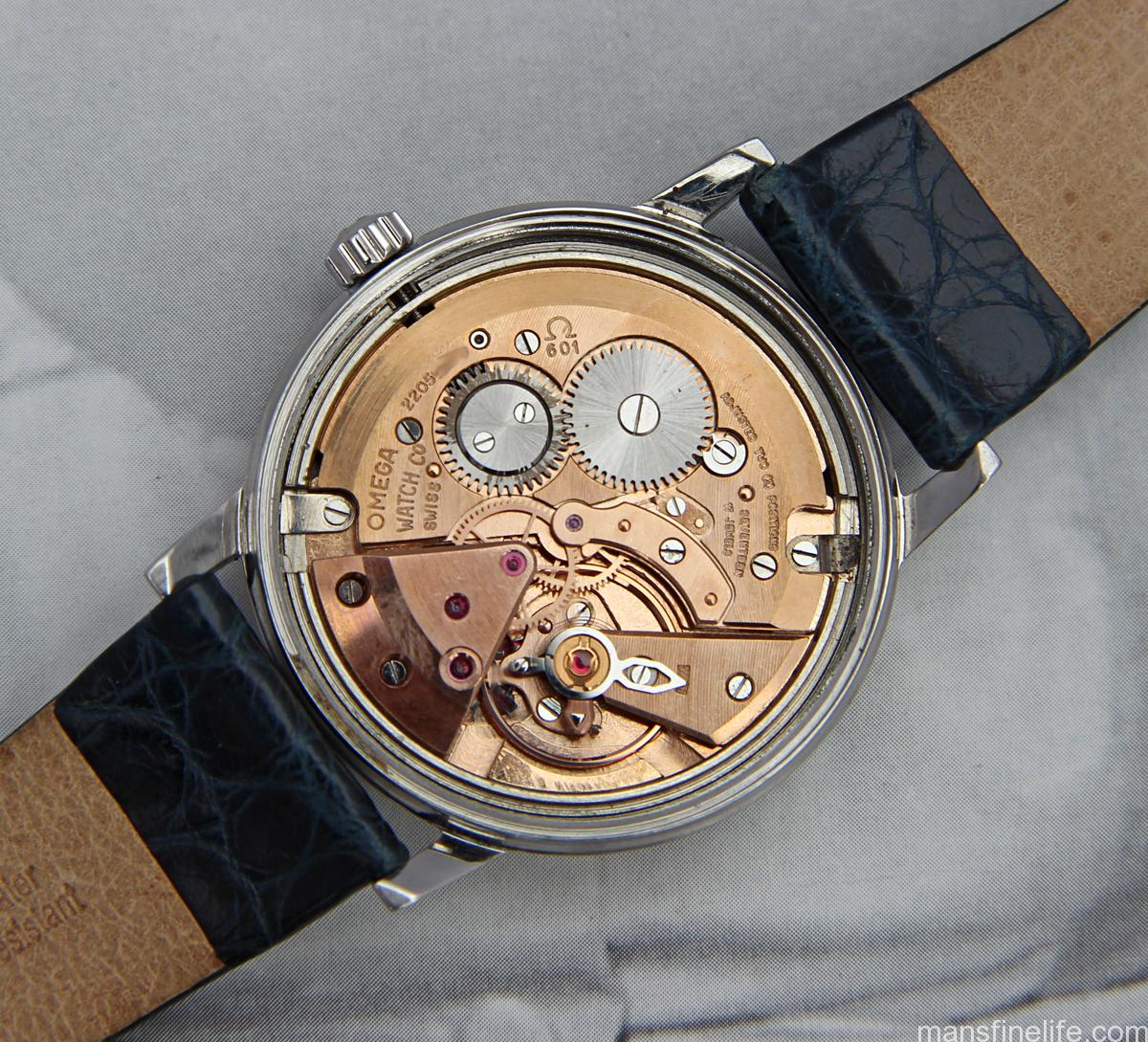
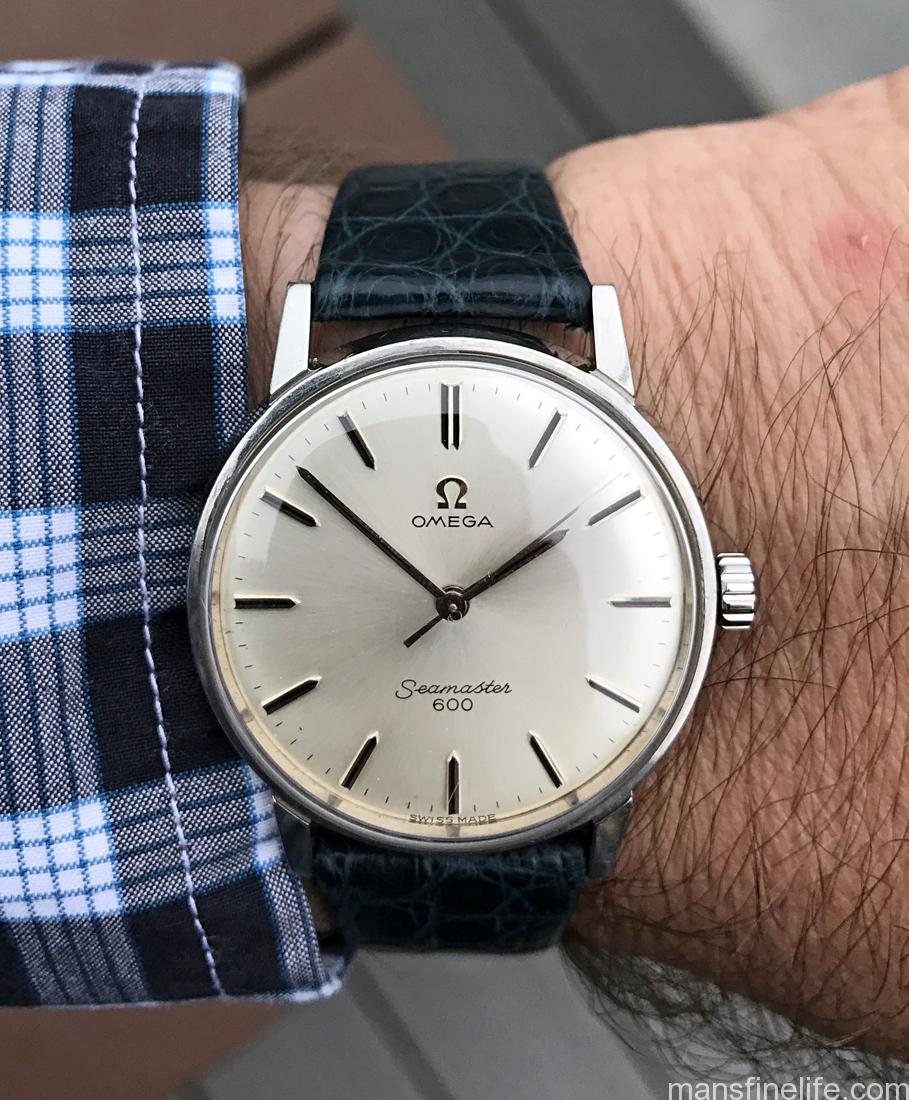
Summer may be gradually winding down but there are still some hot vintage watches to be had. Take this gorgeous mid-1960s Seamaster 600 for example. This classic manual winder from the great house of Omega features a stunning original silver sunburst dial and an elegant yet robust all-steel water resistant screw back case.
Inside that handsome packaging you’ll find another quality in-house movement from Omega, in this case the hand winding caliber 601 finely tuned with two positional adjustments. The connection between a manual watch and its owner can be a pleasurable one, reinforced as it is with the daily interaction of powering up the movement via turning the crown. And I predict a very happy symbiosis for this SM 600 and its new owner.
Whether you’re off to the office or out for a night on the town this classic Seamaster remains as timeless and versatile as when it was designed way back in 1965. Just strap it on and see what this stylish vintage Omega can do for you.

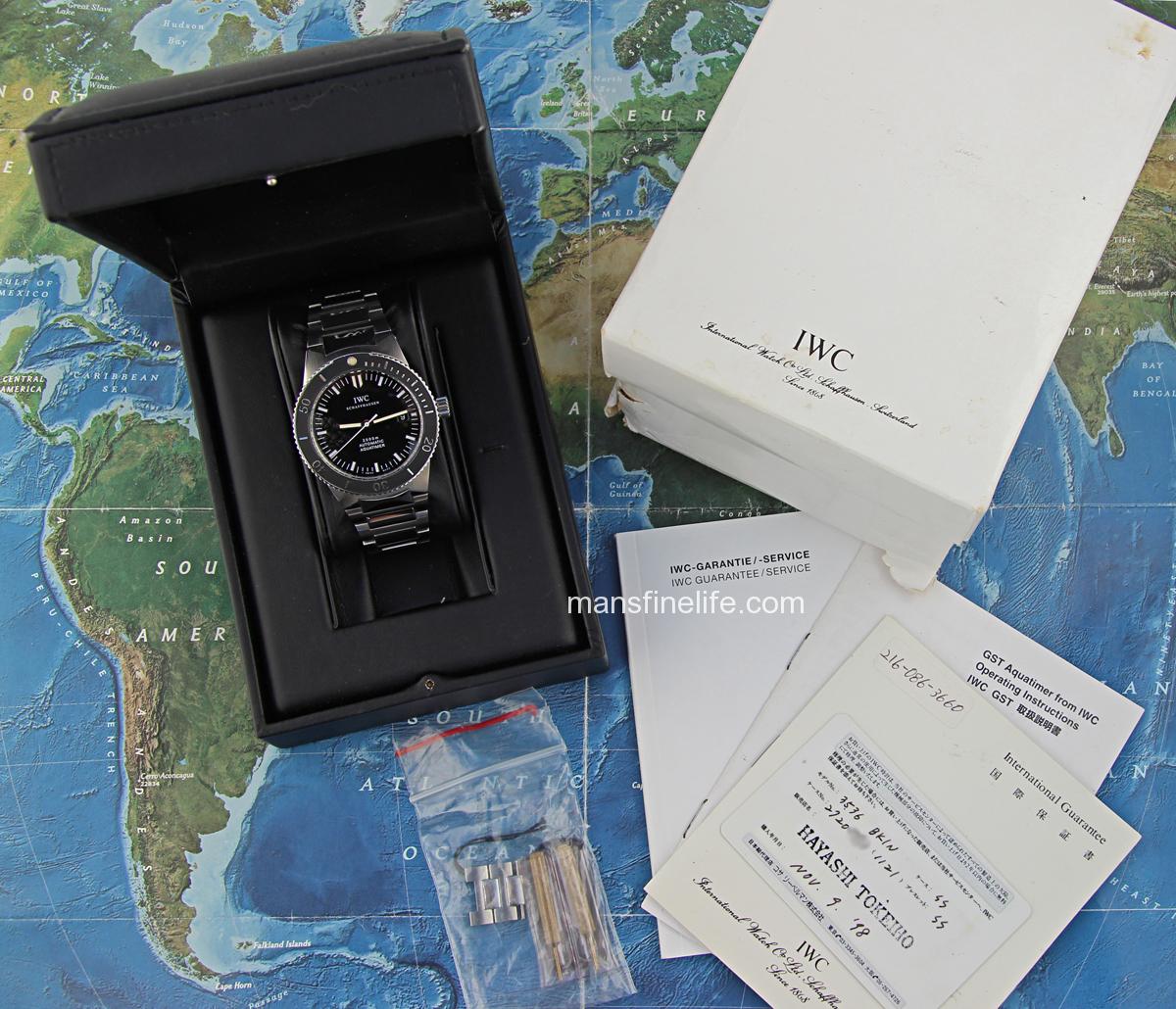 This example of long discontinued and long admired professional grade dive watch has the more uncommon stainless steel case (most were made in titanium) with matching fantastically designed integrated bracelet. Better yet, this true tool watch from the great Schaffhausen marque comes complete with inner and outer boxes, manuals & IWC guarantee card (in Japanese), bracelet tools and a couple of extra links.
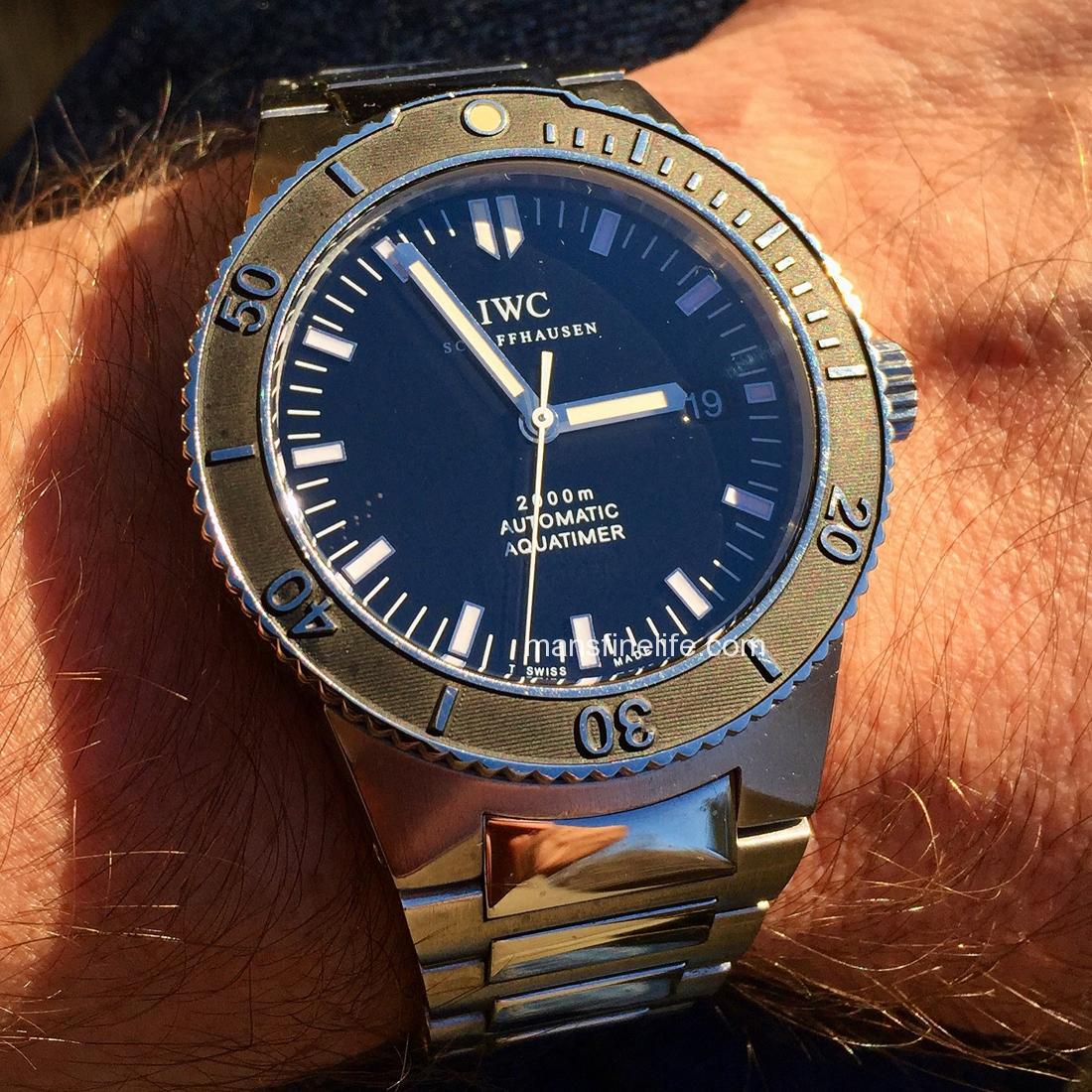 Running like a top and ready for action this big steel IWC Aquatimer 2000 GST is ready for any aquatic adventure you’re likely to dream up. And if you find yourself stuck here in wintertime at least you can console yourself with a stylish, tough and rapidly-becoming-vintage classic on your wrist that can stand up to digging your car out of a snow drift and still help you cut a fine figure when you finally make it your office or evening’s engagement.