Author Archives: tomvox1

What we’re listening to — Not Ready Yet by Eels

Since depression is the watchword the past few days, I think this Eels song from 1996’s Beautiful Freak does an amazing job of encapsulating the hoepless feeling and the futility of someone else telling you to buck up. Listen to the lyrics and tell me if you don’t agree.

Sometimes the best way to beat sadness is to listen to sad music, especially when the singer has more than a passing knowledge of what he’s talking about (as frontman E certainly does). Not everyone’s preferred therapy, I’m sure, but works for me.

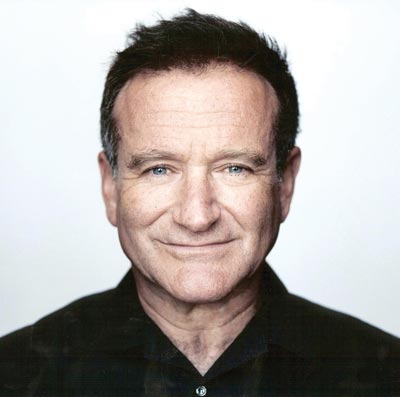
RIP Robin Williams — 1951-2014

Ok, I’ve been procrastinating on posting this because it is so fucking sad. Robin Williams died this August 11th of suicide by self-asphyxiation. The great actor and comedian had been battling depression, as well as falling off of the sobriety wagon in recent years. Williams was just 63 years old. His New York Times Obituary is here and a very good A.O. Scott appraisal with video is here.

Obviously the tragic irony of one of the world’s funniest men succumbing to depression is well-trod ground by now. To think that someone that successful and accomplished could not get the help they needed to make it through the darkness is simply frightening. But in the end we often walk alone in this world and what drives an amazing artist, which Williams undoubtedly was, can come from the dark places of insecurity and sadness deep within, even if the art in question is comedy with a capital C. I can’t think of another person funnier than Robin Williams when he was at his manic improvisatory best. If a talk show appearance can be called art, Williams performed it, on Carson or Letterman or a million other venues that should never have had room for such pocket Dada free associative miniature moments of brilliance. He enlivened the most mundane show business rituals with electric bolts of inspirational lightning. The sense that he was barely in control of his manic energies only added to the thrill ride.

As the years went by, well after his comet-like appearance on the scene in the late 1970s, Williams evinced a melancholy sensitivity in movies like Good Will Hunting, Awakenings and Dead Poets Society that saw him turning into a sounding board for people in need of compassion, especially young people, and an outsider’s point of view to deal with a stifling world. But that sad smile has been there from the start like the tears of Pagliacci, at least as far back as The World According to Garp, Moscow on the Hudson and bursting to raw fruition in Terry Gilliam’s revelatory The Fisher KingThat undercurrent of melancholia was probably a major part of Williams as a person when he wasn’t “on”, obscured in the early days by his irrepressible, some would say uncontrollable, daffy genius when he seemed to be very nearly Bugs Bunny come to life. To be sure, Williams felt loss and sadness keenly through the years with the deaths of such friends as John Belushi, Andy Kaufman, Christopher Reeve and, most recently, his mentor and idol Jonathan Winters. Maybe we just didn’t want to believe that such real life losses would take their toll on our favorite comedian.

A genius in more ways than one, Williams’ gift must have also been something of a curse, creating the expectation in his audience that he must deliver to them transcendental moments of hilarity on demand and at all times. Continue reading

What we’re listening to — The Yardbirds

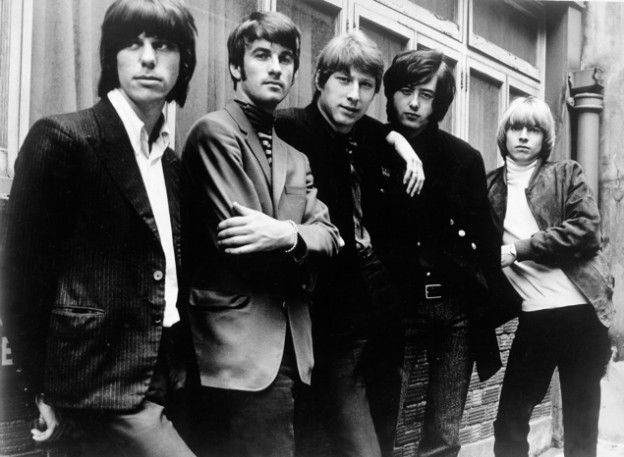
There’s no arguing that The Yardbirds were one of the most important bands at the forefront of the British Invasion following the Beatles trans-Atlantic seismic smash-through. They were also an incubator of greatness. There is no other band in Rock history that can boast of having three of the most legendary guitarists grace their lineup at different points in its evolution. But with first Eric Clapton then Jeff Beck and finally Jimmy Page, The Yardbirds can stake exactly that claim. While they were somewhat eclipsed as a band by their illustrious members’ later fame and renown, it’s important to remember just how bloody good and groundbreaking The Yardbirds really were.

They started out by covering American Blues with an original lineup consisting of lead singer Keith Relf, Paul Samwell-Smith on base, Chris Dreja on rhythm guitar, Jim McCarty on drums and the short-lived Anthony Topham on lead guitar. When Clapton replaced Topham and the band took over the Rolling Stones’ spot at the famed Crawdaddy Club in 1963 the word was out in R&B-mad London that there was a new force to be reckoned with. But, much like the Stones and the Animals, The Yardbirds were not content with traditional Blues covers despite their proficiency and they rapidly branched out into offbeat, minor chord arrangements and a desire to push the Blues further into a heavy rock feel by utilizing distortion and feedback. It’s no accident that the last incarnation of The Yardbirds was actually the first coming together of Led Zeppelin in all but name only. It can be argued that there is a direct line from The Yardbirds fist pioneering improvised raveups circa 1964 to the heavy English Blues explosion of the later 60s that led to not just Zep but Cream, Iron Butterfly, Free, Deep Purple and a million other hard rocking white boys, eventually morphing into Glam and Heavy Metal.

With the charismatic Relf’s distinctive, somewhat ominous baritone and the band’s penchant for offbeat tempos and Eastern influences, The Yardbirds consistently produced some of the most interesting singles of the 60s, beginning with their breakout hit, “For Your Love.”  Continue reading

RIP James Garner, 1928-2014

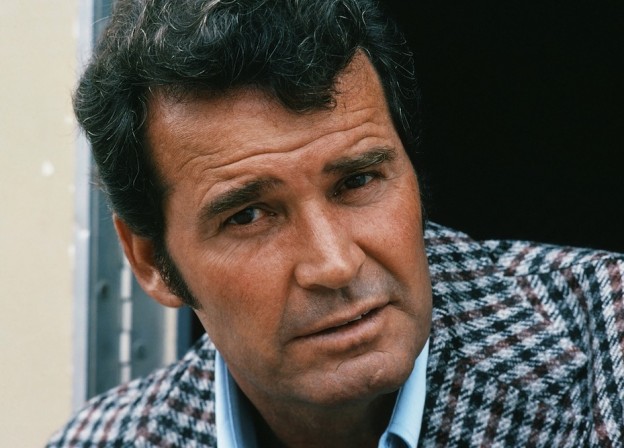
When James Garner passed away the other week at the age of 86 I felt as if I had lost a favorite uncle. Wry, worldly wise, down to earth, a little cynical, a little cranky, very funny and definitely a man’s man, Garner was a uniquely successful and uniquely American actor. The native Oklahoman started out in 1950s television after a very brief theater apprenticeship, and quickly achieved fame in Maverick as the title character Brett Maverick, the dapper and quick-witted Old West card sharp who preferred talking his way out of trouble to shooting. He then rose to stardom as a romantic lead and action star during the last gasp of the old Hollywood studio system: alongside Steve McQueen and Charles Bronson playing the Scrounger in the all-star POW epic The Great Escape and wooing Julie Andrews in Blake Edwards’ sly, sophisticated anti-war comedy, the Americanization of Emily (Garner’s own favorite film). After the excellent Western comedy Support Your Local Sheriff and a foreshadowing turn as a bemused Marlowe, he found cultural immortality back on TV as the iconic and perpetually harassed ex-cop, ex-con gumshoe Jim Rockford.

https://www.youtube.com/watch?v=StcJVOIxLdo

For those of us who grew up in the 1970s, The Rockford Files was omnipresent, from the jaunty Mike Post theme song after the answering machine sequence to the initial run from 1974-1980 to the endless repeats in syndication. The series gleefully embraced a non-glamorous LA with the laconic and perpetually broke private eye working low rent bars and strip clubs while living in a cheap trailer home on Malibu beach, getting his meals from taco and hotdog stands and bouncing checks at the local grocery. It was a unique persona for a hero PI, totally at odds with, say, the slick rich kid mastermind of George Peppard’s Banacek. But then, maybe that’s why The Rockford Files went on to television immortality while Banacek, for all its tacky turtlenecked pleasures, is more of a fun footnote. There was just something so original about Jim Rockford as a hero: the loud sports coats with wide lapels; the wrongful conviction that gave him his cynical perspective; the beatdowns given and received; the clever ruses and identity games when on assignment; his meddling and very funny father (Noah Beery); and always a good old fashioned car chase in the mysteriously overpowered and rubber screeching gold Pontiac Firebird.

https://www.youtube.com/watch?v=Pruex3pgX1g

I told you that theme song was omnipresent! Garner was, in fact, an excellent driver and racer — he caught the bug starring in John Frankenheimer’s seminal racing movie, Grand Prix, competing in several grueling Baja 1000s thereafter — and did much of his own driving on the series, as well as many of his own stunts. Continue reading

tomvox1’s Watches for Sale — July selection, Pt. III

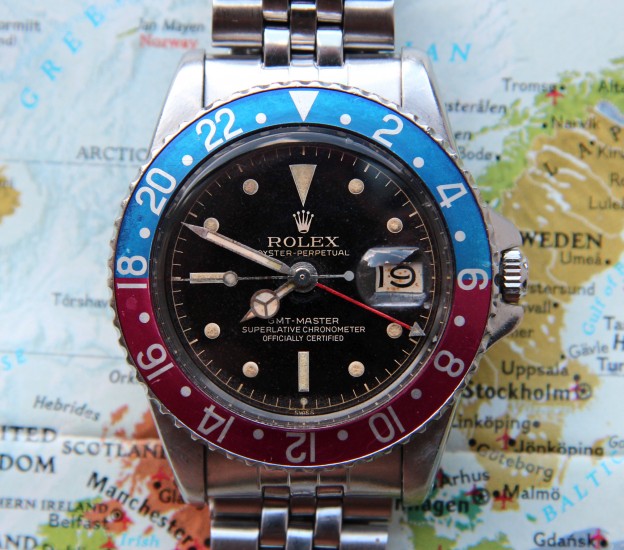
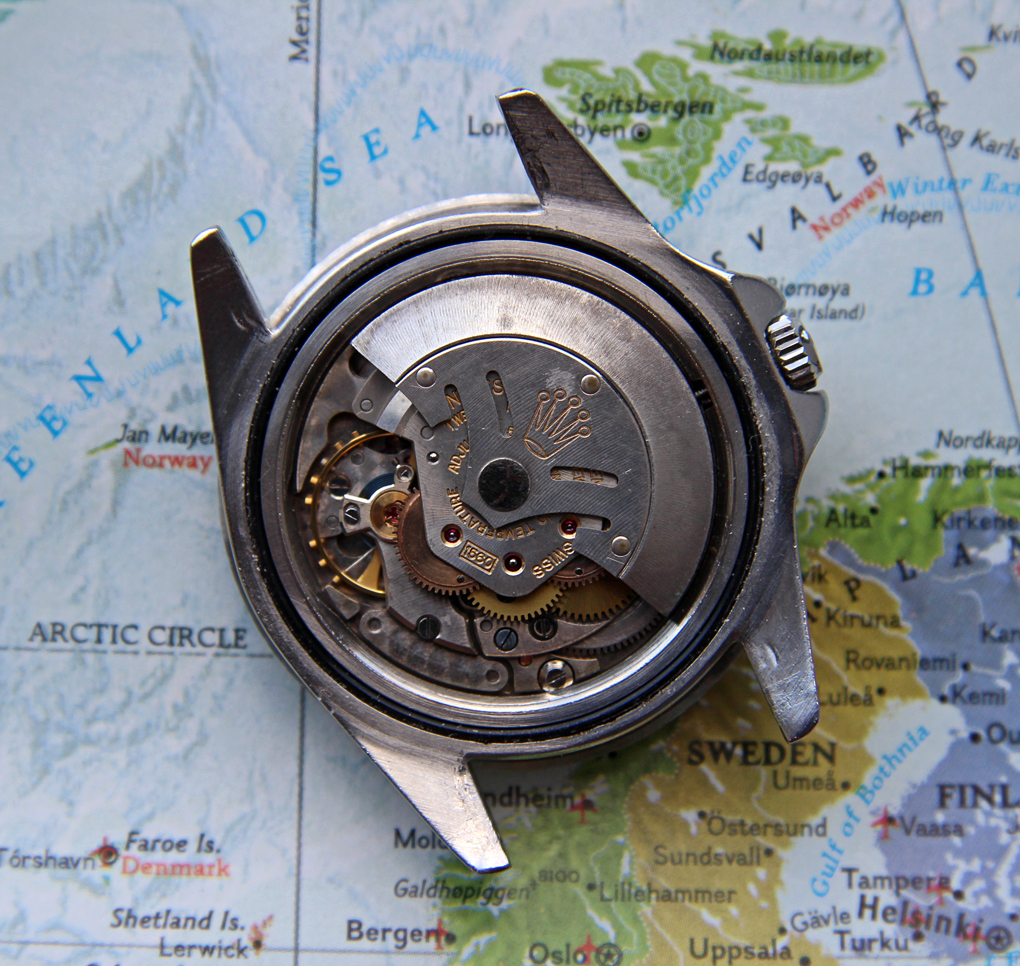
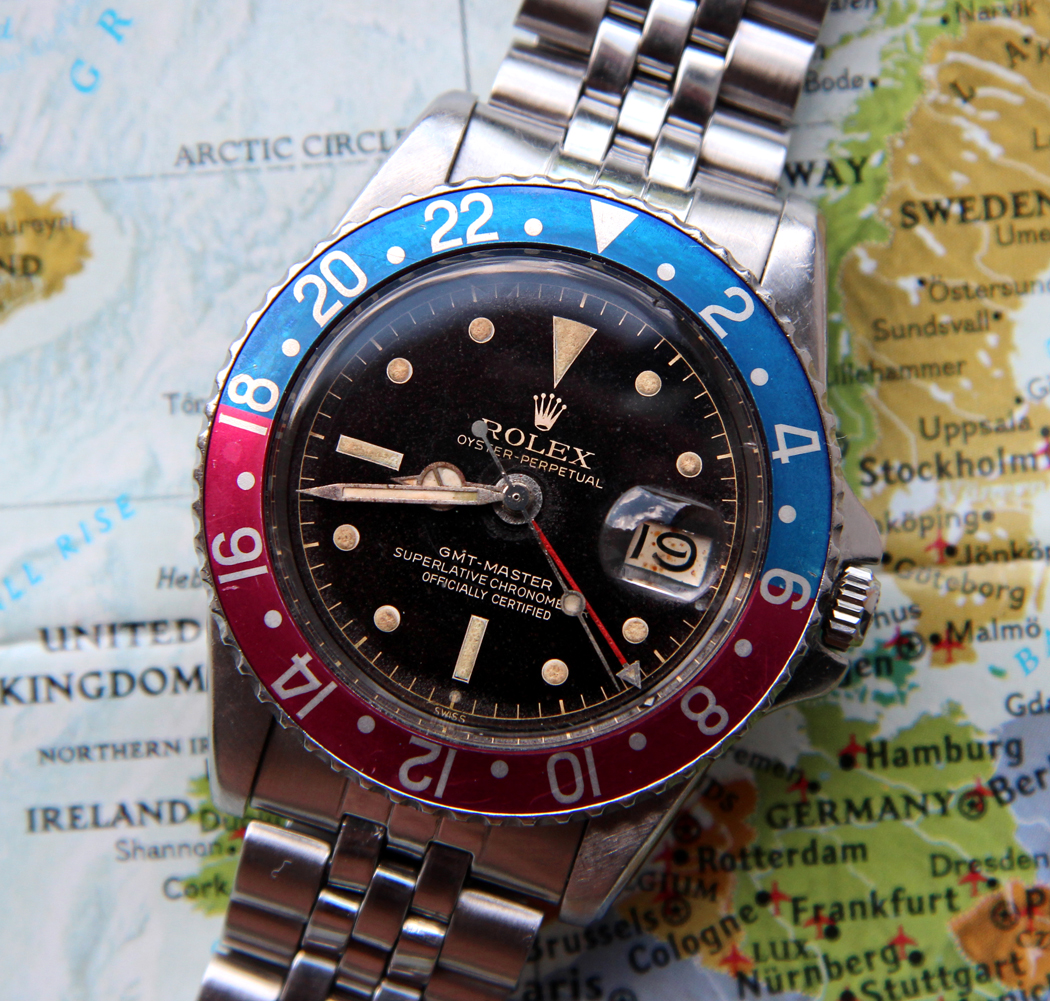
As July winds down to a close it’s my great pleasure to offer one last watch. And it happens to be one of the all time vintage Rolex icons: An early 1960s GMT-Master with gilt/gloss minute track dial, mini 24-hour hand, pointed crown guards case and beautifully faded “Pepsi” bezel insert, with the excellent caliber 1560 GMT chronometer movement under the hood still sporting its original Butterfly rotor.

KM1675Pointy-move_edited-1

I’m selling this one on behalf of a friend and I’m excited to be able to do so, as this classic two time zone watch is such an unmolested, honest example and with just enough WABI to show that it has lived a wonderfully full life. Among the 1960s steel Sports models, this early reference 1675 is right up there with the pointed crown guards 5512 chronometer Submariner as the most desirable and beautiful on the wrist. Simply put, if you want pure Vintage Rolex style of extremely high original quality, this is your watch. It’s not cheap, but then the best things in life never are.

KM1675Pointy-2_edited-1

Check out the complete ad with many more pictures and full description over at the Vintage Rolex Forum’s Market. SOLD

tomvox1’s Watches for Sale — July selection, Pt. II

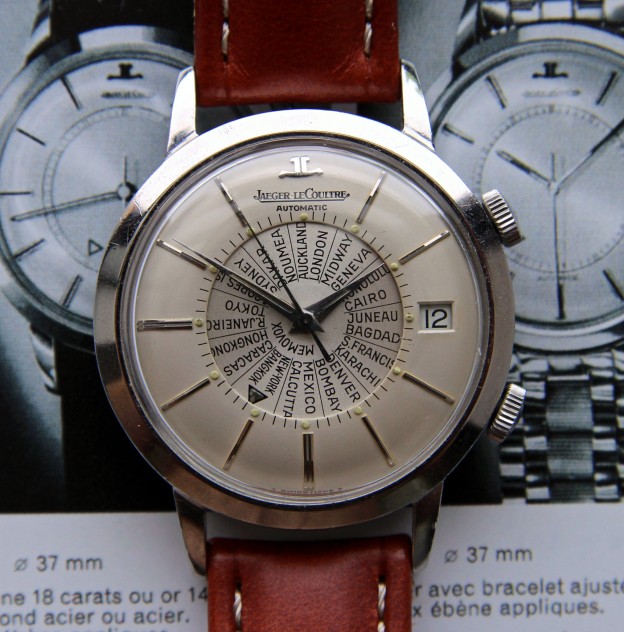
Here’s an unusual one: A highly sought after 1960s “Jumbo” Jaeger-LeCoultre Memovox alarm watch that features a very rare World Time center turntable disc with selected city’s of the world printed to represent the different time zones. As I say in my ad, I can’t say for sure that this disc is correct for this watch — JLC themselves do not have the records to verify that. And some experts maintain that the printing on a World Time disc shouldn’t encroach on the edge of the inner dial one iota. But certainly watch companies back in the day did some very non-standard things when they wanted to sell watches and this disc and the dial as a whole are definitely 100% factory original printing. One thing’s for sure: at a big 37mm and with those exotic cities filling out what would normally be empty space, this is one very cool and classy looking and Memovox.

JLCMemoWorld-1_edited-1

Check out the full ad for this Memovox with World Time disc featuring many more pictures and complete description over at Timezone.com’s Sales Corner.  SOLD

tomvox1’s Watches for Sale, July selection

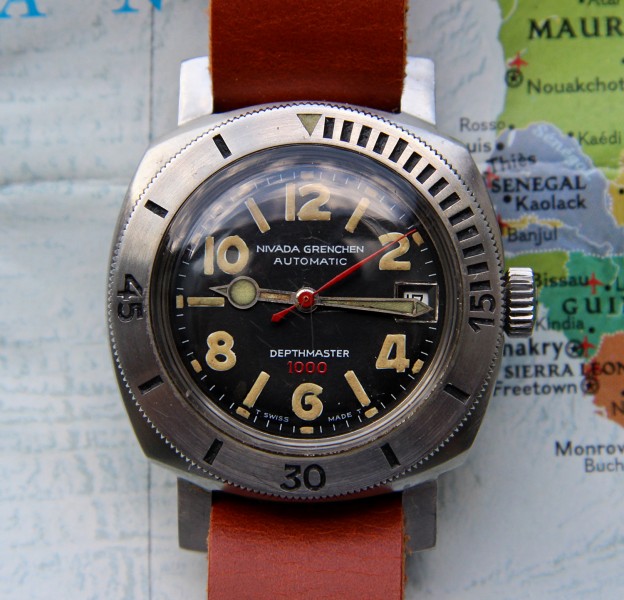
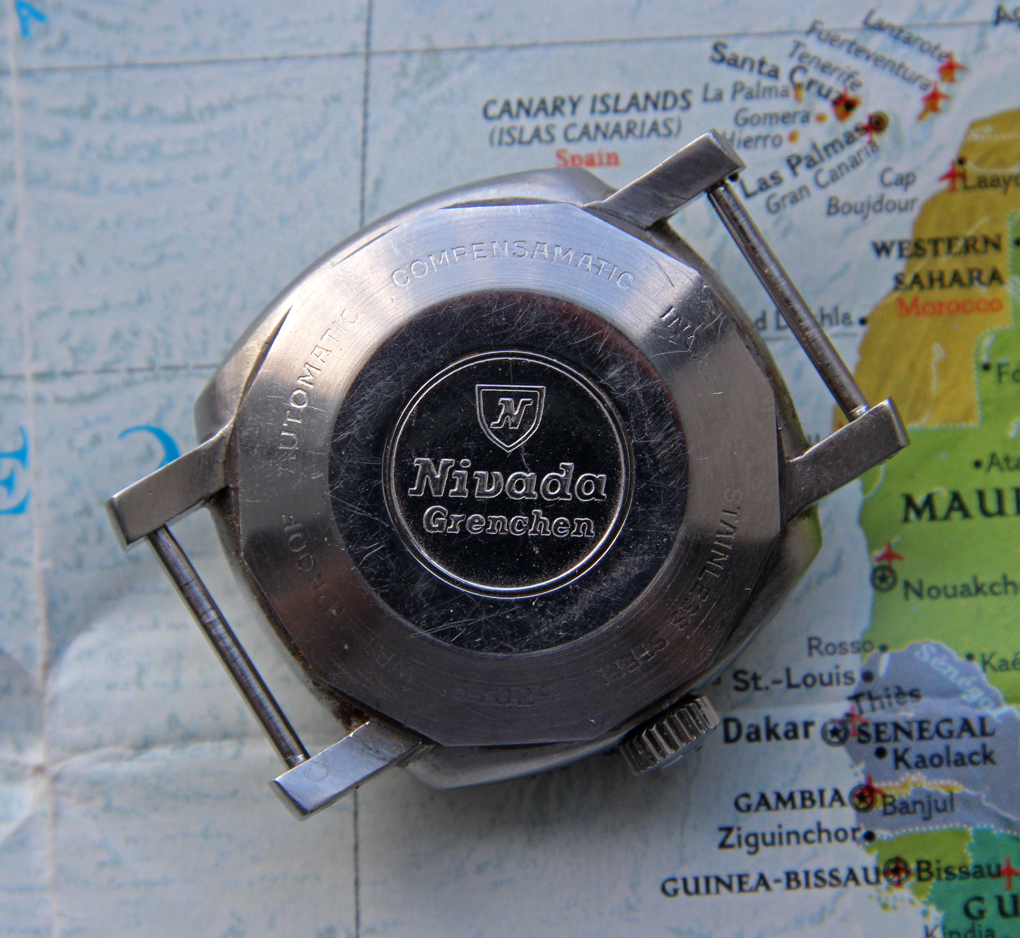
Here’s a cool vintage diver that you won’t see very often, especially not in this kind of condition: a late 1960s/early 70s Nivada Grenchen Depthmaster 1000, also known as the “Baby Panerai”. Why is it called that you might ask? Well, at a nicely proportioned but hardly huge 38mm wide this Depthmaster shares the Oyster-style cushion shape of the Rolex-supplied Panerai cases of Italian naval fame at about 3/4 scale.

NivadaGrenchenDepth-bk_edited-1

It even has screwed spring bars like many PAMs do. Nivada added a nice chunky elapsed time rotating bezel and the Depthmaster 1000 also features a very heavy screwed steel case and very retro semi-Arabics dial with fantastic patina to the thick Tritium figures, plus there’s that cool splash of red to the 1000. And who doesn’t like red on a dial? With its thick, straight lugs and strong but not overpowering wrist presence, the off-brand Nivada Grenchen went and produced something of a design classic with this watch. Perhaps it started as something of an homage but at this late date it has achieved its own cult status. And unlike a Panerai from the 40s or 50s, you don’t have to break the bank to put this icon of vintage style on your wrist.

Check out the complete ad for this killer Depthmaster featuring many more pics and complete description over at Timezone.com’s Sales Corner. SOLD

Watch Collector’s Notebook — Rolex Milgauss GV

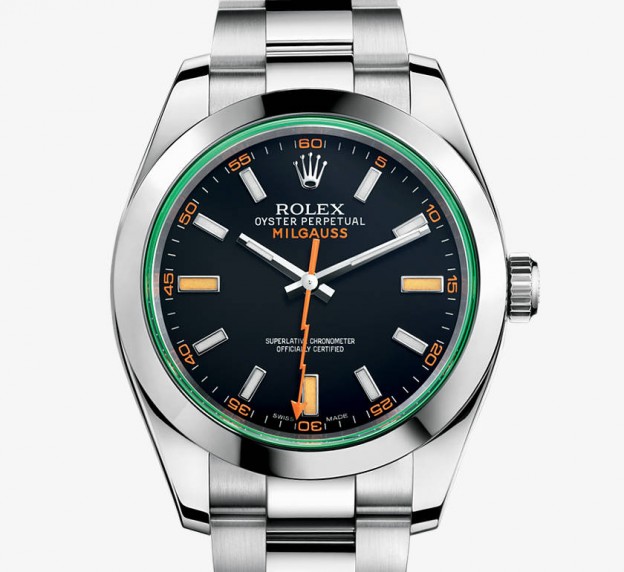
90% if the time I am a 100% vintage watch guy. They have the vibe and design qualities of days gone by that usually make them much more appealing than their shiny modern counterparts. But once in a while I give in to that new watch temptation and fall for something the manufacturers are offering today. The Rolex Milgauss GV is definitely one of those that turned my head and won my ardent affection.

milgauss_m116400gv_3

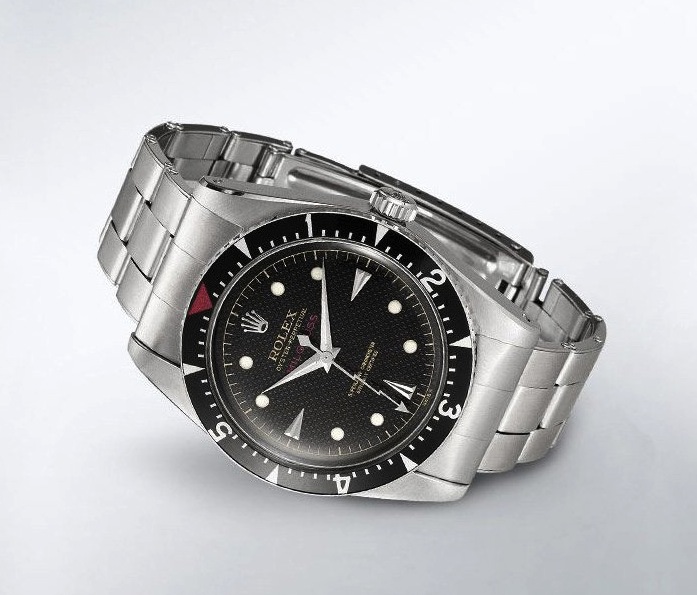
Like a lot of marques in recent years, Rolex has very cleverly paid homage to designs from their storied past while giving them a modern interpretation, as well as all the technological upgrades available in this era. One of the most successful of these “heritage” pieces is the newest iteration of their famous Milgauss line. Dating back to the mid-1950s, the golden age of Tool Watch innovation, the Milgauss was originally designed to stand up to the large magnetic fields being generated by nuclear and other emerging technologies in the Post War era. This specially designed anti-magnetic timepiece could stand highly magnetic environments of up to 1000 gauss, hence the name, and it was marketed to scientists and technicians whose watches would normally be severely disrupted by such high levels of magnetism. Apparently this watch-buying segment was perceived as significant enough to lead to a plethora of anti-magnetic watches being created, as not just the Milgauss but also IWC’s Ingenieur and Omega’s original Railmaster made their debuts around this time.

Original 1956 ref. 6541 Milguass

Original 1956 ref. 6541 Milguass (Image from Antiquorum)

Despite or perhaps because of the emergence of those competitors, the market was never very strong for the original lightning-hand Milgauss. But Rolex kept with it and redesigned the watch in the middle to late 1960s. With a cleaner, more conventional design, the new 1019 Milgauss seemed a more versatile wristwatch for the professional man of science, while still retaining it’s antimagnetic powers through the continued use of the Faraday cage design. Again, though, the Milgauss line was a poor seller in the overall Rolex catalogue, probably due to its rather specific purpose and slightly premium price over a standard dress model, as well as its then-large 38mm size and thick case. With demand for mechanical watches lagging overall, Rolex discontinued the Milgauss by the early 1980s.

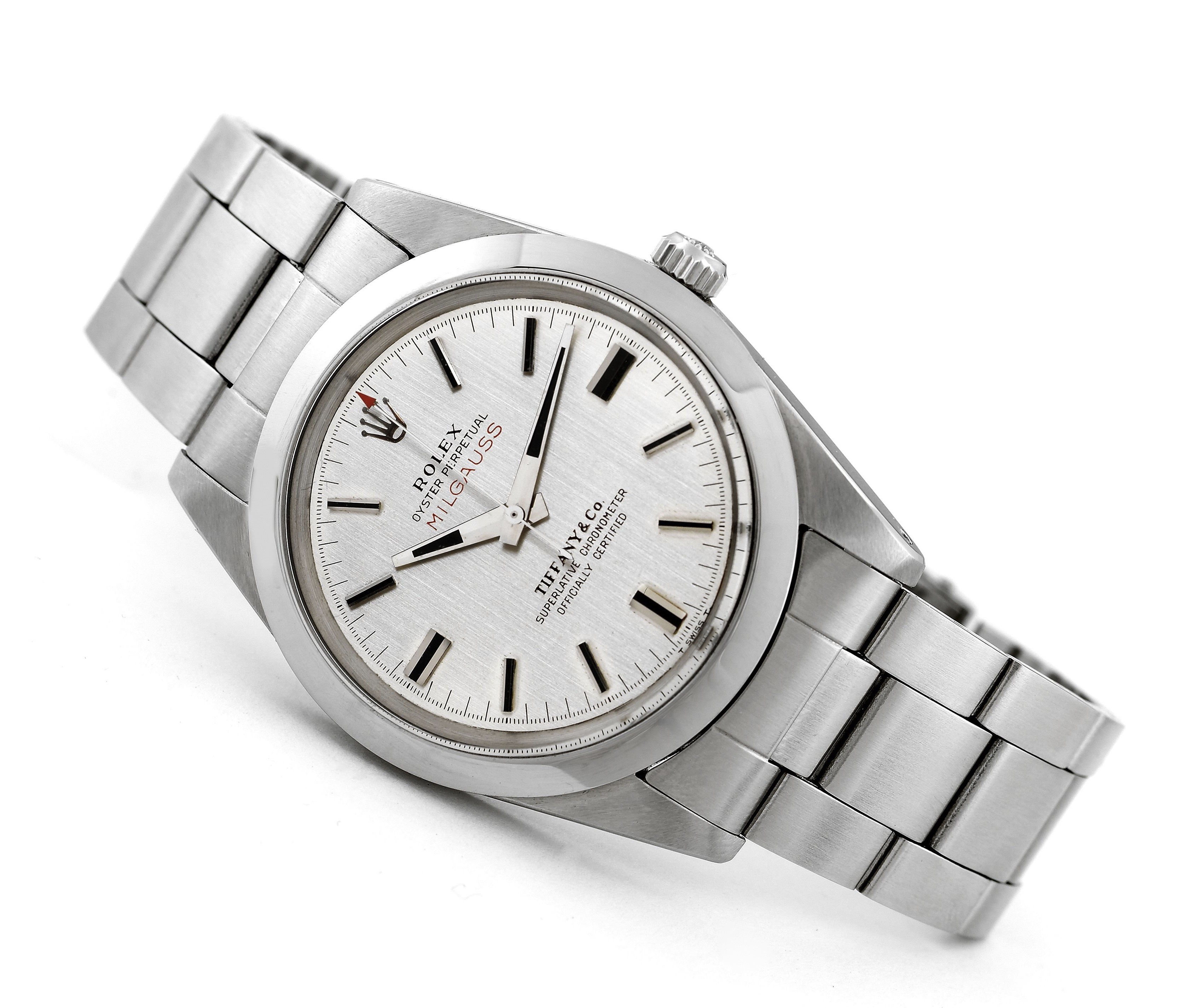
Ref. 1019 with rare double-signed Tiffany Dial (Image from AQ)

Ref. 1019 with rare double-signed Tiffany Dial (Image from AQ)

However, as with so many of the “unpopular” Rolex of their time — such as the original Explorer II, the Tru-Beat, even the Cosmograph Daytona — their very lack of success and smaller production redounded to their later success once they had been removed from the catalog. Continue reading

tomvox1’s Watches For Sale — June selection, Pt. II

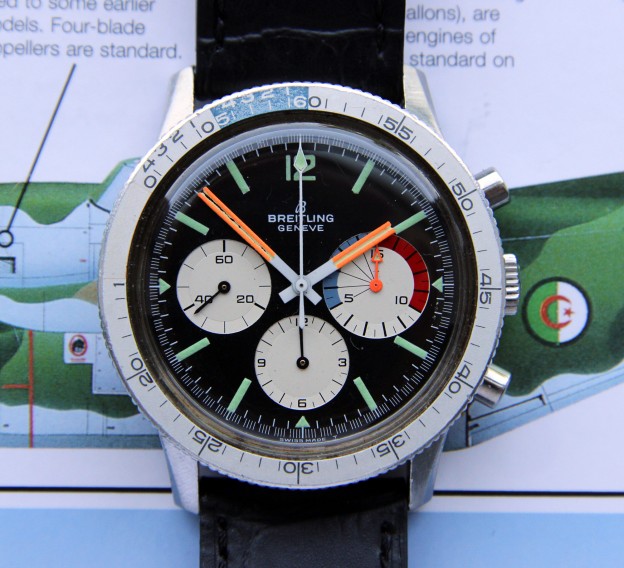
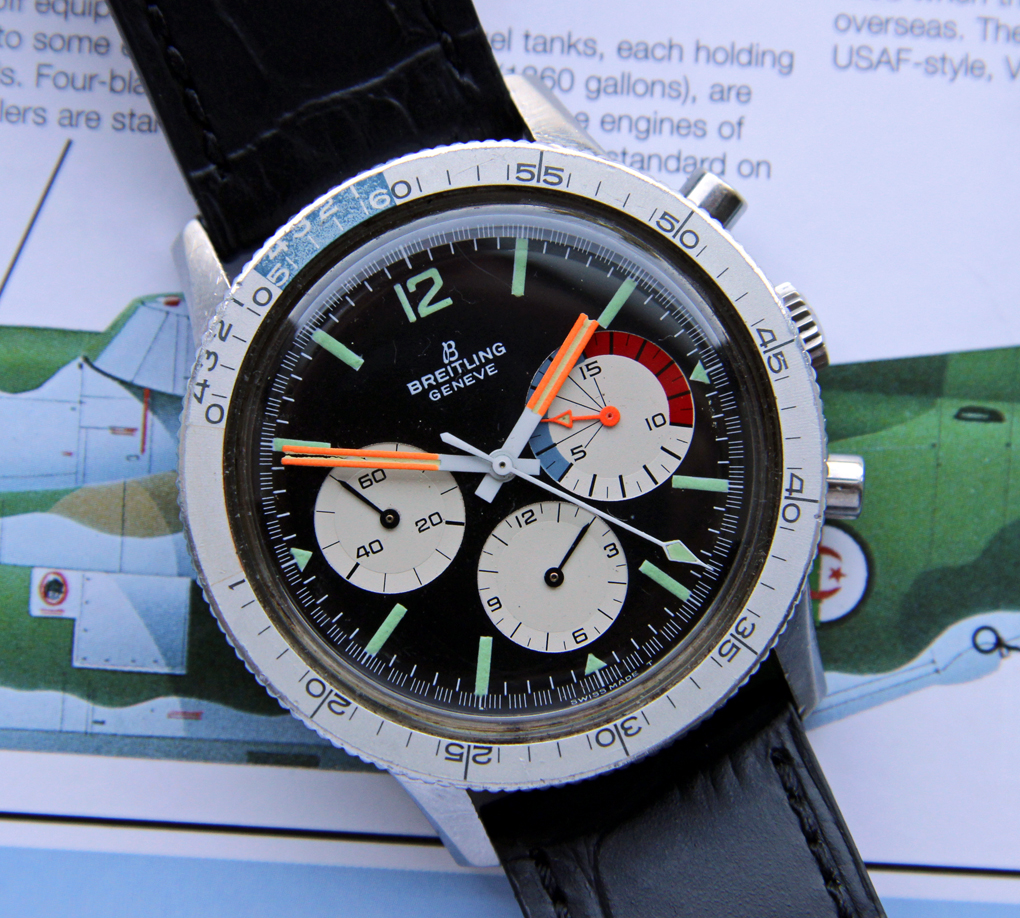
Got another rare watch on offer this month, this time a classic vintage Breitling sports chronograph with a twist. This one is an unusual Co-Pilot model all kitted out for yacht regatta timing. With fantastic added colors to the unique 15-minute register and a color-coded silver elapsed time bezel this reference 7650 has got “late 1960s funky” written all over it. Add to that the very large and chunky 43mm wide case, the distinctive mint green luminous on the dial and the Dayglow-orange hour, minute and counter hands and you’ve got pop art on the wrist.

Breitling 7650Yacht-4_edited-1

Breitling was a pioneer in oversized special purpose tool watches back in the day, a trend they also helped revive in the modern era, and this Co-Pilot “Yachting” chrono is one of their most distinctive and hard-to-find designs — chances are, you won’t see another on anyone else’s wrist.

Check out my ad for this great watch with many more pictures and info over at Timezone’s Showcase. SOLD 

A little Thursday comedy — Slap Shot (1977)

The Stanley Cup Playoffs may be over (proud of you Rangers, congrats LA) but Slap Shot is forever (clips definitely NSFW).

Sure, 1977 was one of the all-time great years in cinema history with the release of Star Wars, Close Encounters, Saturday Night Fever and Annie Hall, not to mention such crowd pleasers as The Spy Who Loved Me and Smokey and the Bandit. But it also saw the premiere of the best, most profane and funniest hockey film ever.

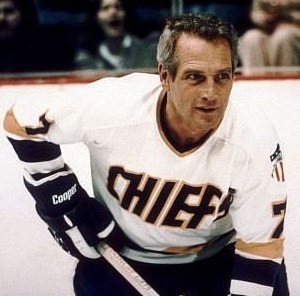
The late, great Paul Newman, Strother Martin, one of the finest character actors of the 60s & 70s, and director George Roy Hill of Butch Cassidy & the Sundance Kid and The Sting fame team up to create not just an uproarious sports comedy but a great movie with the backdrop of the Recession in the Rust Belt grounding the hijinks in place and time and giving the rollicking plot a desperate, melancholy undertone. And for the hockey-oriented, the film serves as a knowing commentary on the eternal existential dilemma of the sport: goonism vs. skillful clean play.

https://www.youtube.com/watch?v=QDXBsKnK4G8

Yes, ’77 was a landmark year for Hollywood where popular entertainment also achieved incredible quality and originality. And Slap Shot is a part of that magical run, a little gem among that year’s remarkable cinematic treasure trove.