
Join me below the fold for the results of what was a very exciting and incident-filled race in Korea…
Join me below the fold for the results of what was a very exciting and incident-filled race in Korea…
Rolex is at once one of the most innovative companies and also one of the most deliberate. Because of Rolex’s conservative approach to changing their watches over the decades you can trace a straight line from the last of the plastic crystal Explorers in the 1980s, for example, back to the Oyster watches they produced in the 1940s. The designs are really quite similar even if some cosmetic things like the dimensions of the watches changed over time.
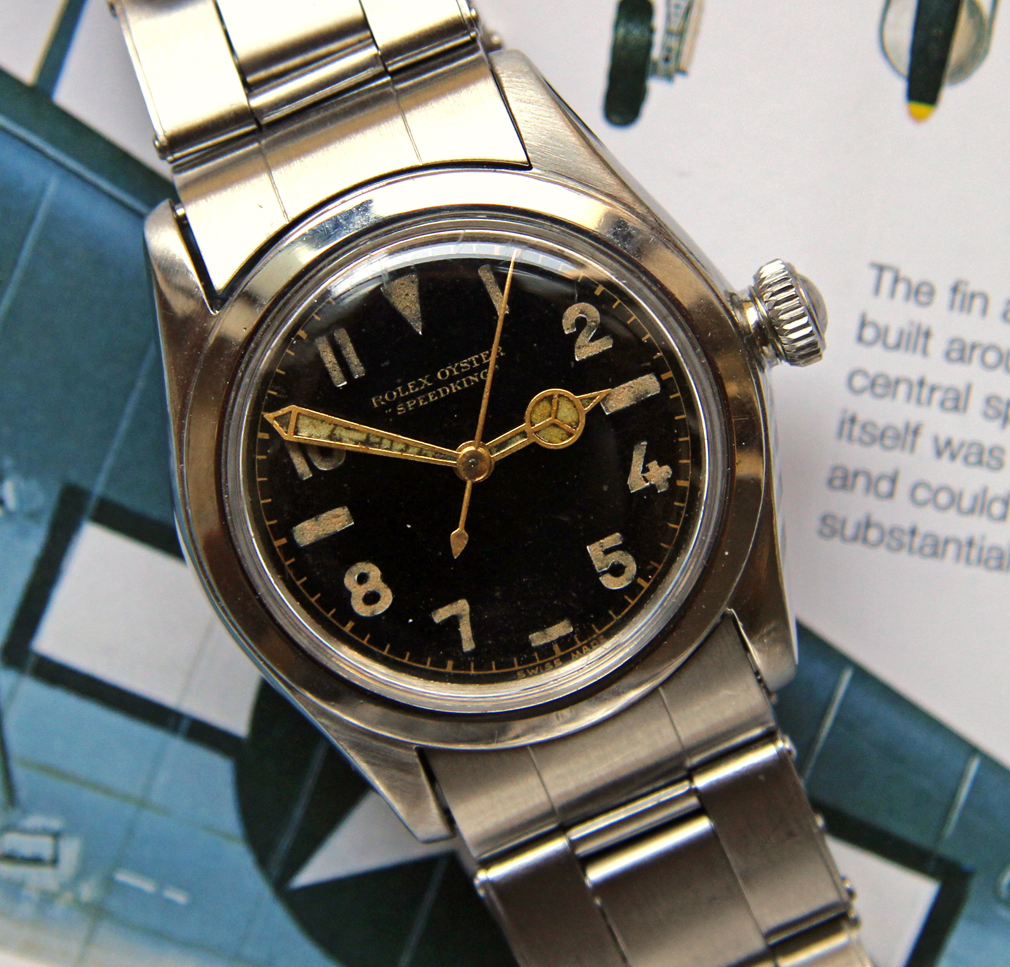
Speedking ref. 2280, ca. 1942

Explorer ref. 1016, ca. 1985
A Datejust from the 1950s looks relatively similar to a Datejust from the 60s, 70s or 80s.
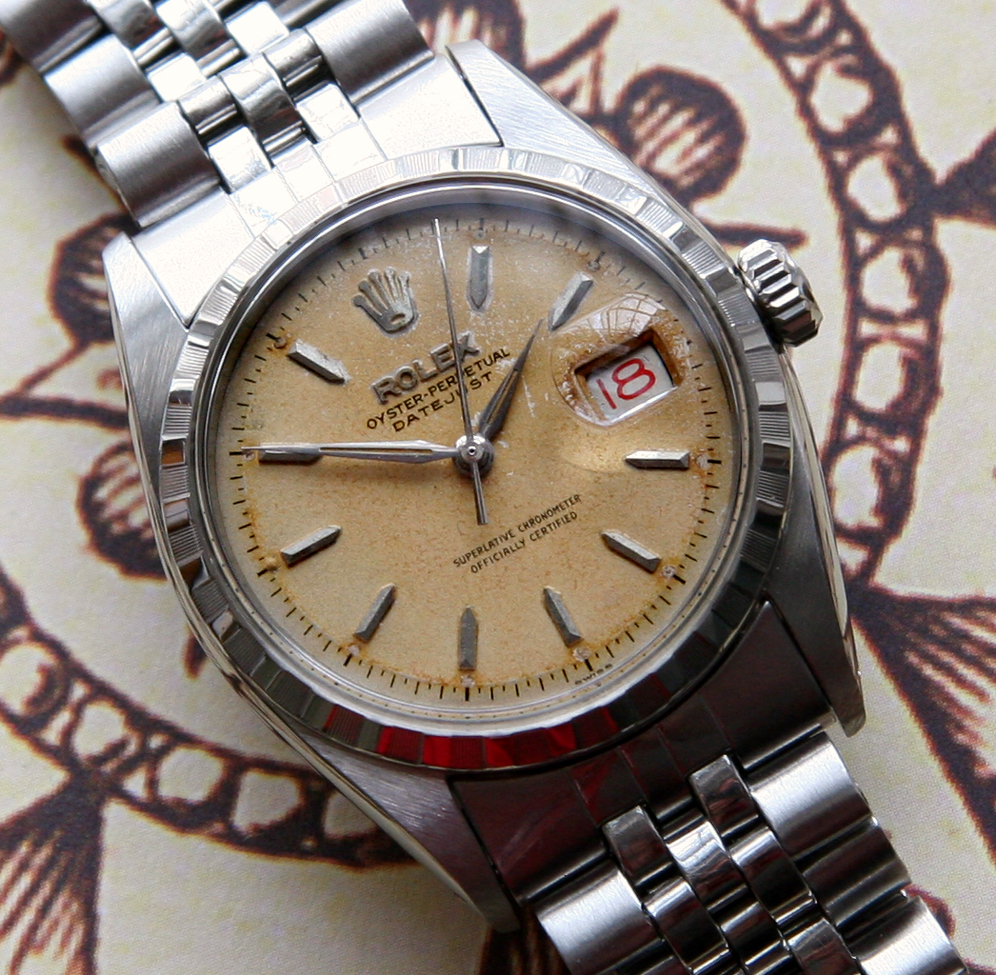
Datejust re. 6605, ca. 1956
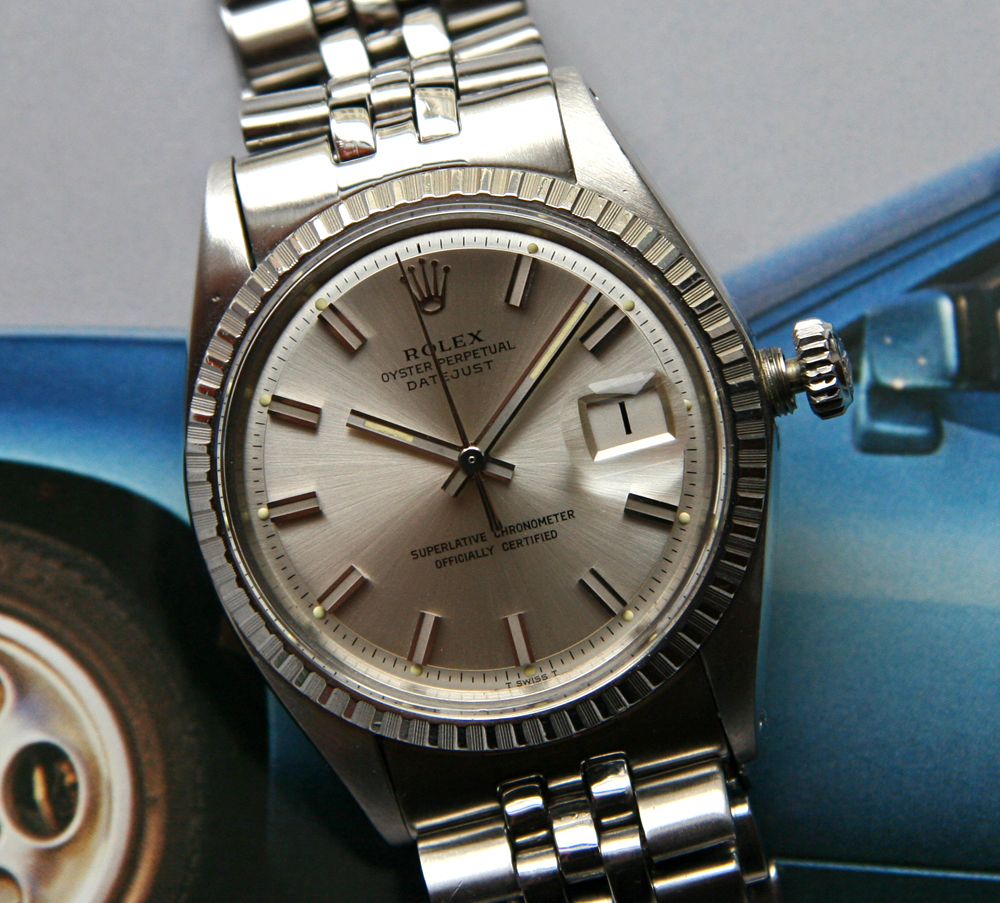
Datejust re. 1603, ca. 1971
And this creates a very comforting and satisfying continuity, the shared heritage of a Rolex Oyster’s ancestry always being present in the next iteration. But–and as a vintage collector this is what hooked me–despite the similarities, there are myriad very small differences. Learning about these subtle changes, sometimes as small as the font on a dial, is the fascinating part of Rolex collecting, as well as often being crucially important to the value and authenticity of a given example. Continue reading
The song that’s still ringing in everyone’s ears after the Breaking Bad finale by the first and best band ever signed to the Beatles’ Apple Records:
http://www.youtube.com/watch?v=03oVJ1WAO2U
The story of Badfinger is just about as sad and depressing as that of Walter White, albeit without the cathartic drug kingpin ego trip. Suffice to say that after an extremely promising start the group were run into the ground by the dishonesty of their manager who paid himself gobs of money from their massive escrow account and gave the artists a pittance in “allowance”; the band never really saw any profits from their amazing run of successful hit singles and lucrative record label contracts. The perception that they were merely Beatles doppelgangers also hurt them artistically as the 70s wore on and there were multiple legal imbroglios. All this bad luck and financial pressure led to the suicides of two of their key members, singer Pete Ham and guitarist Tom Evans, both of whom had also written the lion’s share of the classic hits. If ever there was a cautionary tale of how the seemingly glamorous world of Rock ‘n Roll can be a cesspool of exploitation and broken dreams, Badfinger are it. But Baby Blue and the other great hits survive the sadness and still soar–really great pop music that stands on its own merits, Beatles connections or no.
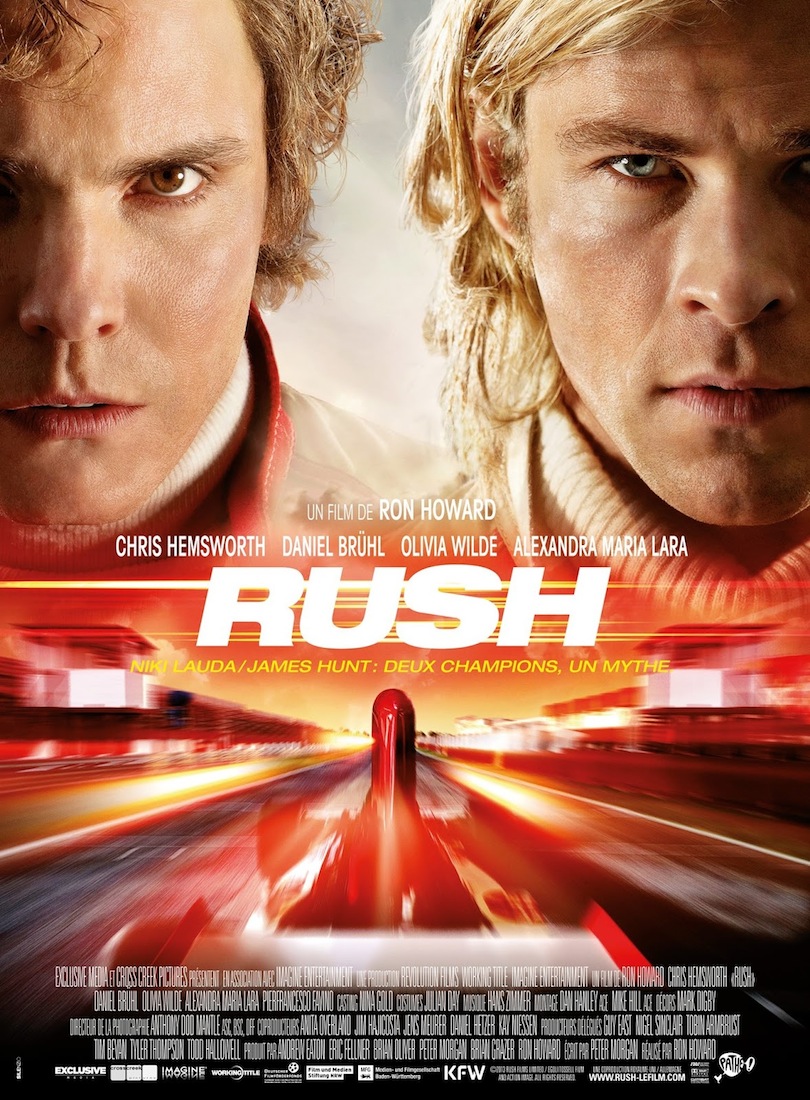
Ron Howard’s Formula One blockbuster Rush opened this past weekend across the country to generally very positive reviews from the critics and rather lackluster box office receipts. Most people, particularly Hollywood cognoscenti, will take that to mean that straight up racing films remain box office poison and that films about the Euro-centric world of F1 are particularly lethal. The thinking will be that unless you have Paul Walker and Vin Diesel blowing things up and destroying the bad guys in stolen hot rods while crashing them into jet liners, the general public is just not going to go to a straight racing movie no matter the high profile director or the technical virtuosity on display amongst all that vroom vroom.
That’s all fine and good but the real issue is: Is Rush any good as a racing film, period? One can make a cult classic that does not attract great popular success and yet still have made something special, exciting and valuable to the cult itself. To truly evaluate Rush one has to compare it with arguably the only other really good racing film Hollywood has ever made, John Frankenheimer’s 1966 Grand Prix. (Obviously, the documentary Senna is indisputably fantastic but we are talking dramatized portrayals). Unfortunately it has to be said that in comparison Rush falls short, not on narrative but on the basis of visceral excitement.
Looking at footage from the two films is instructive of the difference between them. The trailer for Rush:
Here’s a feisty little ditty to kick off the week: The definitive version of eternal boy-man Jonathan Richman’s rockin’ “Roadrunner” as performed by the original incarnation of The Modern Lovers.
http://www.youtube.com/watch?v=BgRYncR1Nog
“Roadrunner (Twice)” is what happens when the Velvet Underground is cross-pollinated with Tommy James & the Shondells in the fertile pleathor bench seat of a salt-rusted Plymouth. Richman’s adenoidal warble declaims his love of Rock’ n Roll, driving the Massachusetts turnpike and AM radio while being urged on by future Talking Head Jerry Harrison’s dominant and dancing keyboards, future Car David Robinson’s hyper tom tom and cymbal-driven drumming and Ernie Brooks’ anchoring bass refrain. This cut is from the seminal LP The Modern Lovers, which was only released in 1976 on Beserkely Records, nearly 5 years after the demise of the original lineup. While Richman re-recorded the song several different ways (and later refused to play it in concert for many years) and he continued calling his backing bands “The Modern Lovers”, it’s this original version that made such a huge impression on the future of American DIY music. It packs a helluva lot of unbridled joy in its 4-minute run time and it arguably launched a multitude of geek-rockers from the Feelies to the Talking Heads to They Might Be Giants to Weezer and many more of the less-than-macho bands in the rock spectrum. In our age when nerds rule, Richman and Co. helped kick off the revolution.
A “Kentucky Bourbon Whiskey” utilizing limestone mineral water from Rosendale, NY and blended in Red Hook, Brooklyn, Widow Jane nonetheless exhibits the best qualities of really fine Bourbon: a hot, almost cognac-like nose; a sweet caramel first impression; a hint of charred oak middle; and a lingering warm burnt orange peel finish.

Widow Jane is one of many eclectic and palate-pleasing products offered by the remarkable Cacao Prieto chocolatier and distiller, which is based out of a beautiful old brick building on Conover Street in Red Hook. But along with their amazing rum, we find the latest batch of 7-years-in-American-oak Bourbon absolutely one of the best liquors we’ve tasted lately with no off notes and smooth-sipping sweetness. At about 91 proof, adding a little branch water or an ice cube is quite all right and will open up the subtle flavors that seem to unfold like a long, warm wave over your tongue. It’s a bit too refined and expensive to be a mixing whiskey (around $58 a fifth) so best to just take your time and enjoy it on its on with a good friend or two. There’s enough going on in each sip to satisfy your senses over the long haul, no additives required. If you’re really craving an Old Fashioned or sour, pull out some Jim Beam and save the Widow Jane for another time. She’s worth it.
We highly recommend paying a visit to Cacao Prieto in person to sample their fantastic chocolate, chocalate-based liquors, stellar white rum and to stock up on the Widow Jane whiskeys available. If you can’t make it out to rapidly rebounding Red Hook, you can order this fine Bourbon through Astor Wines, as well as the vendors listed at the Widow Jane site.
One of the more intriguing and often overlooked alto sax men to come to prominence in the late 1950s and 60s, Jackie McLean straddles the line between the era’s reigning Hard Bop and the Free Jazz being pioneered by Coltrane and Ornette Coleman. With excellent support from an obscure but swinging rhythm section of pianist Larry Willis on piano, Bob Cranshaw on bass and Clifford Jarvis on drums, “Right Now” from the eponymous 1965 Blue Note album is nine and a half minutes of hard charging excitement.
http://www.youtube.com/watch?v=x0JHiZkDZAw
Anchored around a recurring piano-bass refrain reminiscent of Horace Parlan’s “Skoo Chee”, McLean’s hyperkinetic yet melodic sax is shown at its finest on this track and on the entire Right Now! album. In all, McLean recorded 21 albums as leader for Blue Note alone and was elected to the DownBeat Hall of Fame in 2006.
Jackie McLean also passed away in 2006 after an up and down career, with bad contracts and time out for teaching at the University of Hartford. But he still performed intermittently and produced solid work until the end, often with his students. As a really fine and innovative sax player in a very exciting time for Jazz’s development, his almost-but-not-quite sweet and very often sharp sound is ripe for rediscovery.
By now I reckon you’ve had a chance to watch the race. But if not, race results and the aftermath under the fold…
Out on a little day trip today with my lovely wife, I took this from the stern of the cool public East River Ferry service on the way back from Governor’s Island.

Leaving the weekend in our wake on a beautiful late Summer Sunday, the Manhattan & Brooklyn Bridges and the new Freedom Tower & Downtown New York recede in one of the world’s great urban panoramas. Finally, New York City has begun to take advantage of its fantastic waterways and the stunning views they provide. For 5 bucks, you and your bike can travel to Brooklyn and Manhattan by boat and take off from there to find food, fun and adventure in the greatest city in the world. Not too shabby and beats a cab if you’ve got the time. You’ll definitely get a better tan, as well.
If you only know the Byrds from their famous early singles like “Mr. Tambourine Man” and “Feel a Whole Lot Better”, this late model track from 1969’s Dr. Byrds & Mr. Hyde might just hit you like a ton of bricks.
In a band that existed from 1964-1973, the Byrds’ only constant wound up being Roger McGuinn, as they became as famous for line up changes and stylistic shifts as for their musical output. But what remains now after all that history is put away is the glorious music throughout their many iterations. Dr. Byrds & Mr. Hyde inaugurates the Clarence White-era of the band and follows directly after Gram Parsons‘ departure. So while the album still resonates with the influence of Parsons’ innovative country-rock synthesis on such tracks as the all-time great “Drug Store Truck Drivin’ Man” and the traditional ode to a deceased hound dog “Old Blue”, the other tracks border on heavy metal, with White’s heavily distorted and piercing guitar solos soaring over McGuinn’s ominous doom & gloom vocals, all surrounded by John York’s thundering bass and multi-instrmentalist Gene Parsons thumping out a brutal rhythm on the skins. Tracks like “Whiskey” and the scorching cover of Dylan & Danko’s “This Wheel’s On Fire” come fascinatingly close to Led Zeppelin-esque heaviness almost simultaneous to the release of Led Zep I. But then the Byrds in all their incarnations were always trailblazers and at the sharp end of musical trends. From adapting Dylan into 3-minute chiming folk rock pop songs to the raga-inspired psychedelia of “Eight Miles High” to the amazingly unlikely and artistically significant Gram Parsons-Roger McGuinn country rock of Sweethearts of the Rodeo, the Byrds always seemed to be one step ahead of the pack even if they didn’t always reap the commercial rewards of such foresight. Reflecting the prevailing mood of pessimism at the end of the 60s, the late-era gem “Bad Night at the Whiskey” shows the Byrds still had plenty to offer the world of Rock ‘n Roll even if they couldn’t quite make up their mind which way they wanted to fly off to next.